- This guide Offers…
- What Is an Ecommerce Platform?
- When Do You Need an Ecommerce Platform?
- Four Different Types of Ecommerce Platforms
- Basic Features of E Commerce Website
- High-tech Ecommerce Platform Features
- Some Amazing Facts Regarding Ecommerce Platform Features
- Perks of Choosing the Right Ecommerce Platform
- How To Add Ecommerce to Your Website? Learn in Simple Steps
- Conclusion
Do you know that among all the ecommerce websites list of Chinese competitors, Douyin, JD.com, and Taobao, Amazon possesses the highest sales value. Then comes, the Alibaba Group which operates Taobao, the biggest online shopping company in Asia. And yes! You must have heard of Temu where you’re spending most of your time and money. Do you know who operates it? It’s Pinduoduo! These are all ecommerce platform list with amazing ecommerce platform features.
This also confirms that having an online store nowadays is not just about putting products on a website.
To expand, compete and sell, you need to know the correct definition of what is an ecommerce website. Furthermore, to get more engagement and conversions, learn about what are some elements that might be included in an e-commerce platform on a website? When you know the right ecommerce platform features and tools, you can definitely make an impact.
This guide Offers…
The blog offers everything you need to know about ecommerce platform features, all the ins and outs. From basic e commerce websites meaning to more complex AI powered ecommerce capabilities that you may not know of. We will also discuss the ecommerce website requirements, important features of an ecommerce website, types of platforms available and how you can choose the one that fit you best.
Let’s get started
What Is an Ecommerce Platform?
An ecommerce platform is a software that enables companies to create, operate and run an online shop. You can consider it to be the engine of your online store. Ever wondered what are the best ecommerce features list? Well, the platform provides with bulk stock listing, inventory management, secure payments, shipping, and customer accounts.
If you’re still scratching your back wondering what is an ecommerce website meaning in easy words? Consider it as an online platform with features that help you make sales online. Simple! You list down your products and add ecommerce site features such as secure check out, product and inventory management, marketing tools and reports. Everything in one single platform.
Without it, you would have had to install numerous applications, do a lot of manual work, and implement complicated integrations – which may make growth extremely difficult.
When Do You Need an Ecommerce Platform?
Not all businesses require one immediately, but the majority of online businesses are benefitting from one. When you are willing to sell products or services online, expand your digital footprint or replace your outdated tools with new ones. Either way, you do need basic modules of ecommerce website.
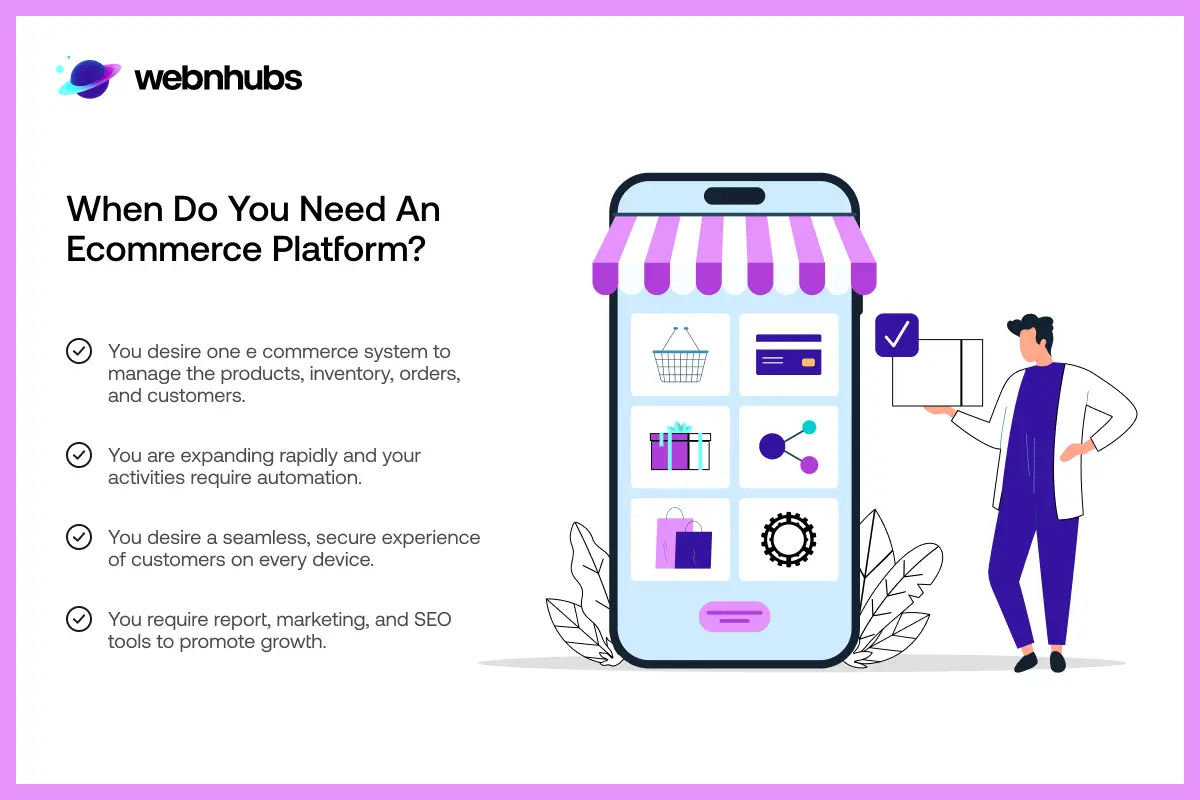
Signs
- You desire one e commerce system to manage the products, inventory, orders, and customers.
- You are expanding rapidly and your activities require automation.
- You desire a seamless, secure experience of customers on every device.
- You require report, marketing, and SEO tools to promote growth.
Selecting the appropriate platform keeps your store operational, provides an excellent customer experience, and offers the e-commerce capabilities that would ensure success in the long term.
Four Different Types of Ecommerce Platforms
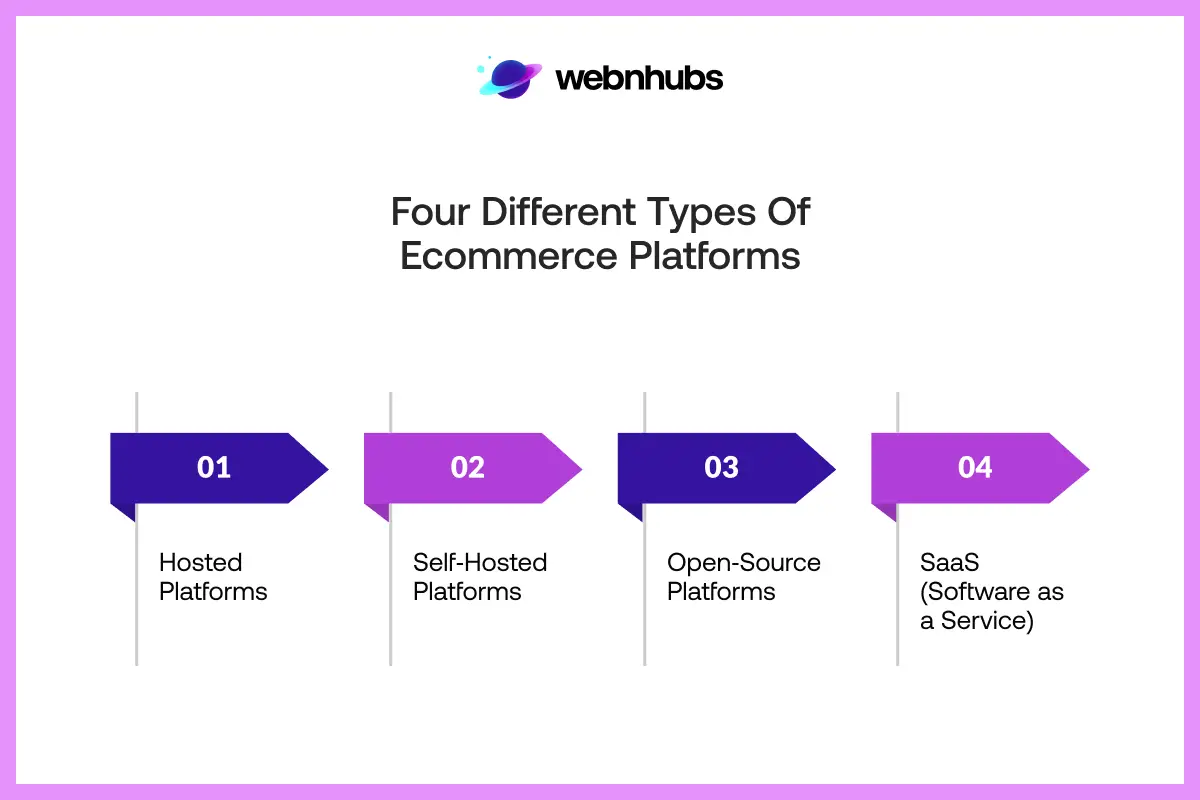
There are four types of platforms. Both have advantages that can suit various business sizes, expertise and expansion strategies.
Hosted Platforms
Hosted platforms include Shopify that provide you with solid ecommerce website management system. These include hosting, updates, security and backup that are are excellent for businesses looking for easy and beginner-friendly solutions. Hosted platforms compliment e-commerce functionality, providing with easy payment processing and other marketing and reporting tools. It is efficient for a list of ecommerce companies who wants to start early without hiring tech team.
Self‑Hosted Platforms
In self-hosted hosting, you install and operate your own server. They are the most flexible and offer maximum control. It suits businesses that require a custom functionality and complete control of their store.
One drawback only if you want to see it like one is that it requires deeper technical expertise and frequent updating.
The most popular ones are Wix, BigCommerce, WooCommerce installation in your own server. If you are using this one, you need to manage hosting and security of your store by yourself.
Open‑Source Platforms
The open-source ecommerce platform such as Zen Cart, and Magento are free of charge and can be completely customized.
If you working with a client, brand or business who value customization, then this is the best platform to use. It provides developers with an extremely customized experience, sophisticated features, plugins and custom designs.
It allows you to add anything you want to it, so the store can grow with time and be more scalable.
SaaS (Software as a Service)
SaaS is an auto-updating and self-secure and supported cloud based platform, hosted as a subscription. They combine the ease of hosted platforms with additional enhanced features, including marketing automation, AI suggestions, and analytics.
It is simple to use, easy to scale, and ideal to those businesses that desire rapid expansion without dealing with tech support.
Basic Features of E Commerce Website
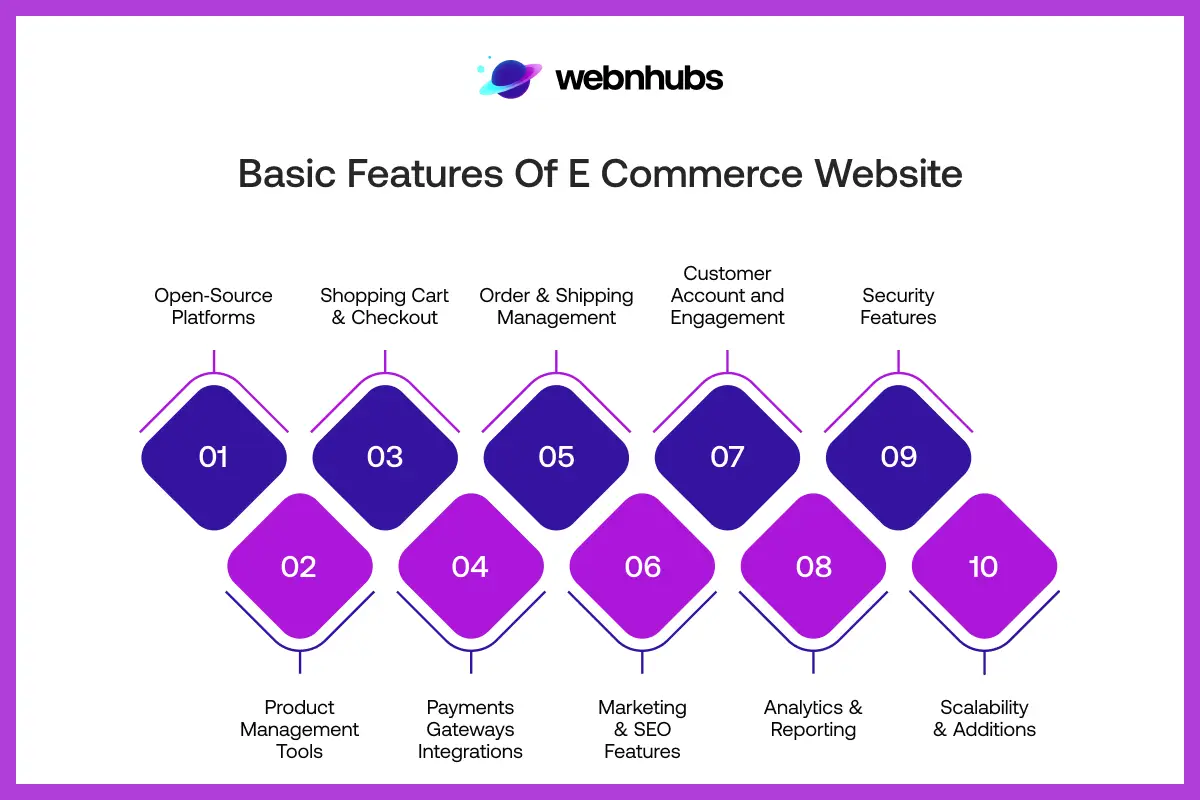
The power of any ecommerce business lies in the functionality that drives it. Be it the simplest components of an ecommerce shop, or the most superior elements you have seen on the web, these fundamental components determine how well your online shop operates.
The following are the must-haves that any modern ecommerce site needs to have, stated in a simple, understandable and customer-centric manner.
User-Friendly Interface
An excellent ecommerce site is the one that has intuitive and easy to navigate ecommerce search features. It provides customers with an intuitive interface and a smooth shopping process.
Moreover, other amazing e commerce features include proper product listing and page view that is quick and not confusing. It is verified that the majority of shoppers are purchasing their phones and mobile responsive website is in trend.
Take notes on this, your website loading speed needs to be under 5 seconds. Any additional seconds is going to cost your sales and face heavy bounce rate.
Product Management Tools
Your storefront should be as clean as your backroom. Features of ecommerce website like good product-management allow you to add variations, make changes and manage large catalogs effectively. Through bulk file uploading or live inventory monitoring, these e commerce system features ensure your store is correct, current, and prepared to expand.
Shopping Cart & Checkout
Checkout is where the customers make their decisions to remain or to go. The guest checkout has been supported on a solid platform to enable quick buys, one page checkout to minimize the steps and automatic calculation of tax and shipping costs to promote clarity. Included discounts and coupons are designed to make it easier to buy more than once without additional applications, and all this makes the process of checking out easier.
Payments Gateways Integrations
Shoppers have confidence in places where they can pay with a lot of security and flexibility. You should have a variety of gateways, digital wallets, and even multi-currency payments to customers around the globe. PCI compliant processing ensures safety of sensitive data which will make your store secure and trustworthy.
Order & Shipping Management
When shipping tools are unified in the site, order fulfillment is simpler. Live shipping rates, inbuilt courier, and inbuilt order tracking allows you to deliver fast and precisely. It is a basic refund and refund system that will provide customer satisfaction and also eliminate manual work on your part.
Marketing & SEO Features
Your shop must be visible – and that is achieved with good SEO and marketing tools. Custom URLs, meta tags, auto sitemaps and inbuilt SEO fields enhance rankings. Email marketing, upselling, cross-selling, and loyalty program integrations can be used to increase sales and retain customers without the need to install multiple additional extensions.
Customer Account and Engagement
Customers appreciate control and customization. This is why the contemporary platforms have user accounts, wish lists, saved carts and order and/or promotion notifications. These attributes enhance customer interaction and ensure a shopping experience that customers desire to revisit.
Analytics & Reporting
Smart business decisions are made using data. Your platform would have straightforward dashboards which would monitor sales trends, customer behavior, product performance, and traffic insights. With these kinds of reports, you are able to narrow down strategy and become confident.
Security Features
A safe ecommerce site creates trust immediately. Customers and merchants are safeguarded with the help of SSL encryption, data protection, and fraud-detection tools. As cyber threats continue to rise, powerful security features are not a choice to a platform, but a necessity.
Scalability & Additions
Your tech should increase as your brand increases. Plug and play platform with API access, third-party integration and scalable cloud lets you add new features indefinitely. Scalable ecommerce allows you to have a long-term success, whether it is expanding into new markets, diversifying your sales channels, or expanding your catalog.
High-tech Ecommerce Platform Features
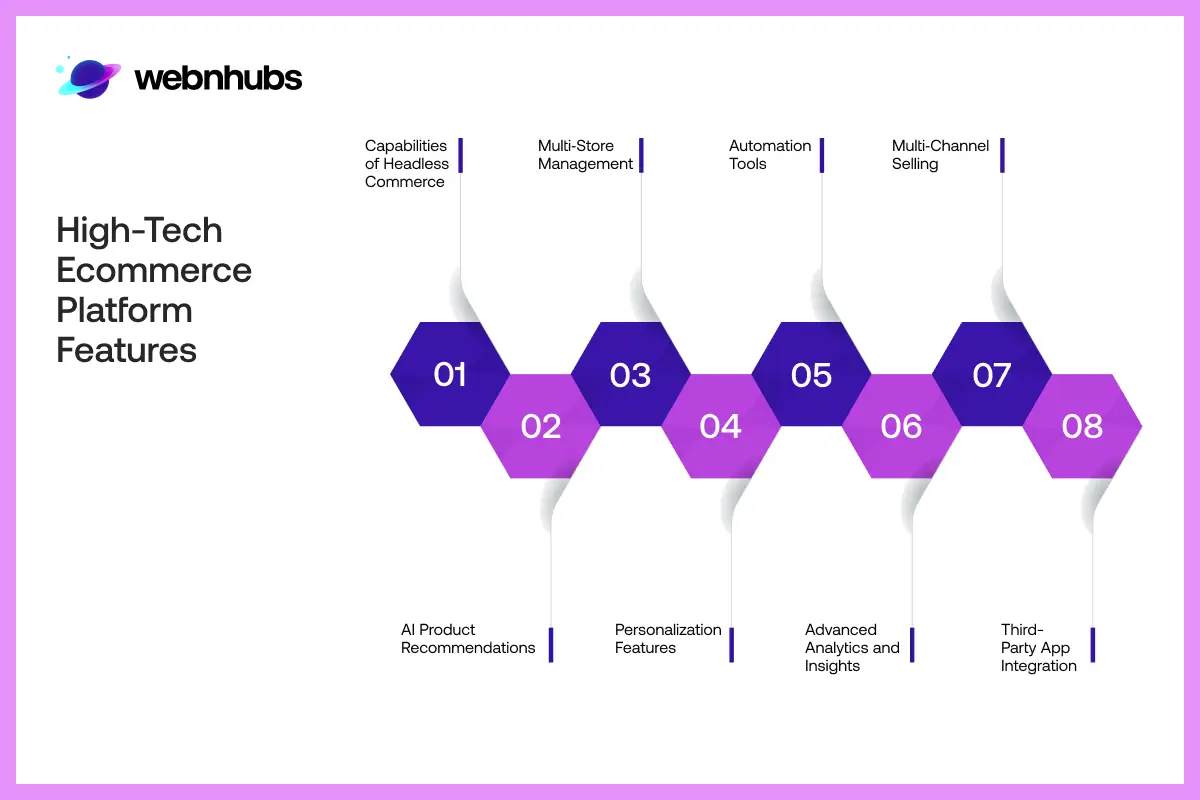
If the basic features of your ecommerce list are in place, try to consider the advanced ecommerce platform features. They will add glitters and shine to your store by making it 100x functional. These assist you to become unique, automate work, and provide customers with a personalized shopping experience. With all these you also get to know which feature is commonly found in a website management editor? Exciting right?
AI Product Recommendations
AI will be able to analyze customer behavior and recommend what they are most likely to purchase. Artificially intelligent sites receive greater engagement, increased order values, and a smarter shopping experience without you physically doing the same. This is a powerful addition to your e-commerce tools.
Capabilities of Headless Commerce
Wondering about what is ecommerce functionality particularly for headless commerce? Well, not one but there are many. First and foremost, a headless ecommerce platform isolates both the customer-facing and the non-customer-facing sections of your site. It provides you with full design and functionality freedom. This also makes your store future-proof, you can sell on more than one channel. And something that is non-negotiable, it makes your site quicker, and allow you to add third-party apps with ease.
Multi‑Store Management
When you have multiple brands or sell in various regions, having multiple stores in a single dashboard is a huge benefit. You are able to synchronize the inventory and customize the look and feel of each store to suit its market, all of which a powerful e-commerce platform.
Personalization Features
Customers respond to experiences that are custom to them well. Personalized landing pages, dynamic content, and special offers are considered features that make customers feel valued and increase the rate of conversion. One of the important elements of great e-commerce is personalization.
Automation Tools
Automation will reduce the amount of work that you need to do manually and will make your store a run smoother. It helps update inventory, marketing, cart abandonment, and customer follow-ups. The appropriate automation tools will save time and increase customer satisfaction.
Advanced Analytics and Insights
In addition to simple insights, these advanced analytics can detect how customers are navigating your site, what trends to expect in the future. The data you receive can focus your marketing plans and inventory choice and make your platform smarter.
Multi‑Channel Selling
Modern customers have a lot of platforms. Selling options that allow you to sell on social media, marketplaces and mobile applications expand your reach. Multi-channel selling will position your products in the areas with the most active customers and enhance the performance of e-commerce in general.
Third-Party App Integration
The most optimal platforms are compatible with ERP, CRM, marketing, and shipping tools. This flexibility enables you to add new capabilities without modification of systems, providing your business with speed and efficiency.
It is these sophisticated capabilities that transform a simple online shop into a competitive and growth-oriented e-commerce site. When you invest in sites that have such capabilities, you are ensuring that your business remains flexible, customer-oriented, and prepared to deal with the dynamic e-commerce environment.
Want to grow by satisfying your customers?
Invest on choosing the best ecommerce platform features.
Some Amazing Facts Regarding Ecommerce Platform Features
According to Hostinger, 2.64 billion people are shopping online annually, these online stores are what we call web ecommerce stores. Do you know what makes a good ecommerce website? It is use of right list of ecommerce website features.
Statista predicted that the retail online sales will surpass 4.3 trillion U.S. dollars across the world by 2025, and the figure is likely to go higher in the coming years.
The global online sales are estimated to rise to more than 7.9 trillion U.S. dollars by end of 2025 as compared to 5.8 trillion U.S. dollars in 2023.
As stated in a blog by Prefix Box, Businesses and brands using optimized ecommerce software features experience a boost of 15.8% more conversions rate.
Perks of Choosing the Right Ecommerce Platform

The selection of appropriate ecommerce platform is not only features, but results. The proper system can make your online shop, make more sales and provide a comfortable experience to the customer. Let’s look at the key benefits.
Higher Conversion Rates
Things that are convenient to operate with, attractive on phones, and checkout with ease are naturally beneficial in getting more customers to purchase. According to Super AGI, stores having search AI recommendations receive 35-40% more conversion or sales compared to average online stores.
Better Customer Experience
Shoppers desire quick, customized, and efficient shopping. If you choose a platform that has wish lists, saved carts, and real-time order tracking options, wouldn’t you love it? Of course you would. By using efficient ecommerce platform features, you can help customers with product recommendations and in return get their engagement and loyalty. Remember, an excellent ecommerce site is one that shoppers love go to.
Effective Workflows and Less Manual Labor
Automation tools are there to help with the repetitive, boring work. Who likes managing bulk product manually? With the right platform, you will have proper management and inbuilt shipping systems. As a team, you will be able to focus on expanding your business rather than these human errors. Okay see, having proper web maintenance is very important in 2025 because it saves both money and time.
Stronger Brand Presence
A professional ecommerce system will keep you at the forefront, it presents your brand voice everywhere. Your store will appear both professional and reliable with the built-in marketing tools, personalized experiences and scalable design. All these ecommerce platform features will help grow your brand every time you engage with a customer.
Ability to Scale and Grow
The appropriate environment allows you to expand freely. You can sell internationally, introduce new merchandise, or establish additional store fronts, and it can keep pace with your enterprise. It is a long-term investment because you will not need to change platforms as you grow.
How To Add Ecommerce to Your Website? Learn in Simple Steps

When selecting an ecommerce platform, do not look for the one that provides you with all the features. Instead, look for the one that meet your objectives, business size, product listings and budget. Here is a simple guide to explain how to select the best platform.
Start with Finding Your Business Size and Needs
You need to look at the size of your company and what is needs. Are you a large company or a small one? Do you require more than one store or a single one? Understanding these two can assist you in selecting a platform that works today and, in the future as well.
The Essential and Advanced Features You Need
Write down the features that are important for you and brand to expand. Look for a platform that can provide with user-friendly navigation, mobile-friendly, convenient checkout, secure payment methods, and promotion tools. Then consider extras such as AI suggestions, automation and headless commerce. Knowing the difference will enable you to choose what is most important.
Take Cost, Customization, Long-term Growth into Account
You can’t wish to have everything, especially when it’s not needed. Look at your pocket and then make a decision whether you want a hosted, SaaS and open-source platform. They all have different subscription cost. Write down the fee and the features it provides and then choose. Remember, a scalable platform will have you save expensive relocation in future.
Review Support and Security
Good support and good security are necessary. Find 24 /7 customer support, easy-to-follow instructions, and adherence to data protection legislation. A safe system secures consumer information and develops a sense of trust. These two features play a vital role when it comes to website management and retaining clients.
Test the User Experience
Do a demo trial before you make the decision. As a shopper would, browse the site and look for the checkout process to see how swift it is. Also engage with the product pages and check whether it has mobile friendly feature. Having this firsthand experience allows you to identify any possible issues and ensure that the platform matches your requirements.
Don’t wing it when it comes to success
Test your ecommerce platform features and choose the one that expands with your business..
Conclusion
The most crucial decision that you can make with regards to your online enterprise is the selection of the appropriate ecommerce platform. A quality platform provides you with everything you require such as the ease of checkout, secure payments, product management, and the chance to expand.
The key point is that you should concentrate on the things that are most important in your business interests. Take time to test the features of the platform, compare the prices, support and ensure it fits the way you want your store to develop.
The more the match, the less effort it takes to operate the store and give your customers a great experience. Your online store must be of service to you and not the vice versa. Do the proper evaluation, comparison, and then you will be able to select one with confidence.
Still Uncertain About Ecommerce Sites?
Contact Webnhubs! We are here to assist you in selecting the appropriate tools and features for your online store.
FAQs
Search safe payments, mobile-friendly design, product management, easy navigation, SEO tools, integrations, analytics and good customer support.
Simply because you need to grow, expand and automate all your operations. You can’t be sitting there doing all the manual work which can cause errors. It is important that you choose the right one to provide a smooth shopping experience that only grow forward not back.
If the goal is to provide users with an amazing experience that they come back to, go with the Shopify, Wix, or BigCommerce. They are equipped with inbuilt features, templates and simple set ups to new store owners.
Create a list of items that depend on what you are planning to accomplish with your business like customization, marketing tools, scalability, price, and integrations, and when comparing the platforms, check them.
By simply adding plugins or using platform services such as WooCommerce, Shopify Buy Button, or Ecwid. These tools enable you to add products pages, payments and checkout without having to recreate the entire site.