
- The Blog Offers...
- Foundation of Your Character
- Visual Design Basics
- Clothing and Accessories
- Iteration and Sketching
- Digital vs. Traditional Character Design Approaches
- Tools for Character Design
- Add Life to Visual Characters
- Key Errors in Character Design Process
- The Effect of Character Style on Engagement
- Finding Inspiration and Being Curious
- Conclusion
- Your Ideas, Our Imagination
Character, the word used in so many contexts, but commonly refers to the personality or the trait. Do you ever wonder if you know how to design characters of your choice? Well, in 2026, this is possible because of different character design tips and rules.
Look at someone with a certain haircut, and you call it Dora. Ask young kids or even adults about their favorite superpower character and they will mention Batman and Superman. That’s the power of character silhouettes. This also explains how much time, energy and emotions people invest into characters.
If you want to learn how to design a character, first learn about what is character design or why is character design important.
Instead of failing miserably and losing all your interest, contact a professional character design company or read this blog on how to design character in simple steps.
The Blog Offers…
In this character design guide, we educate you on how to come up with a character design, in case you’re creating one. The basics are same, be it an animation character design, a sweet cartoon character design or a cool video game character design. All you have to do is start with a character in mind that people can relate to.
If you succeed in pulling a good character design, you can easily make audience understand your whole narrative.
Now, when the attention span is less than a minute, knowing how to design a character with an impact can get you nth number of engagements.
Take this blog as your guide as we discuss steps, ideas, tools, errors of character designs.
Foundation of Your Character
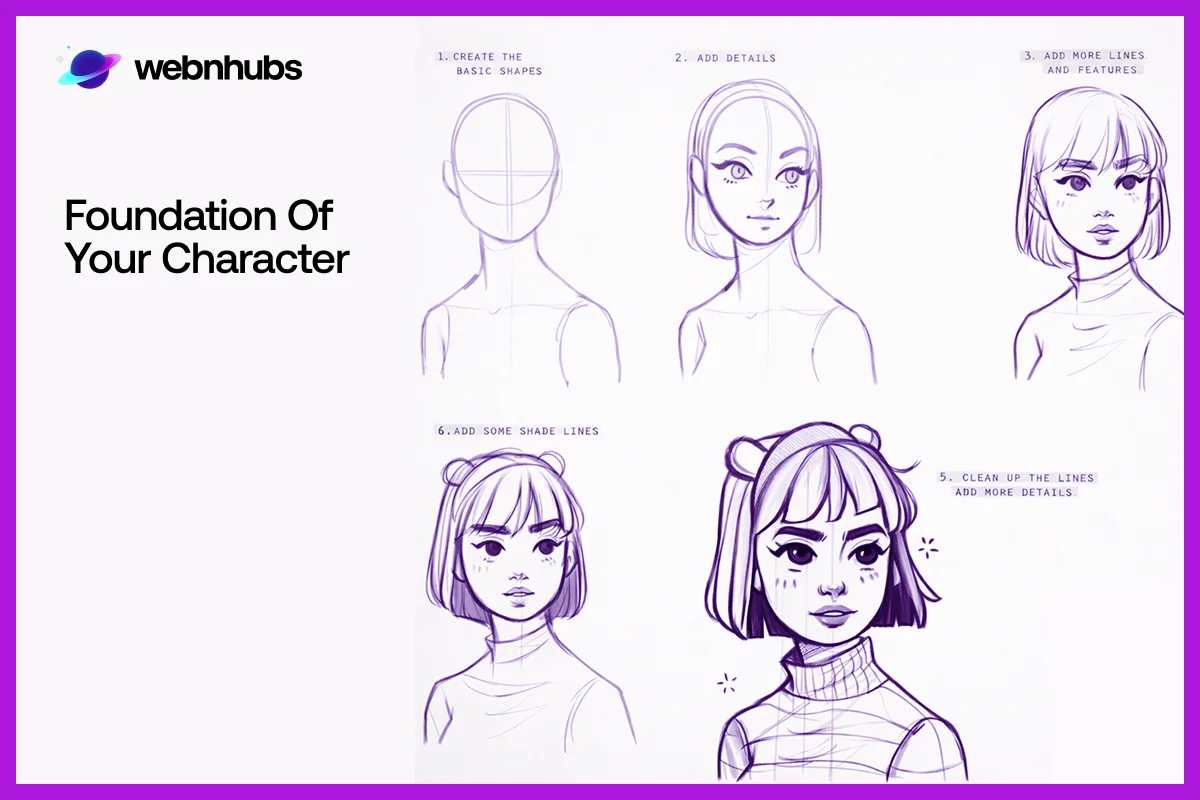
You must prepare the ground before you think of sketching. And this is where character design starts, in your mind, not on paper.
Define the Character’s Role
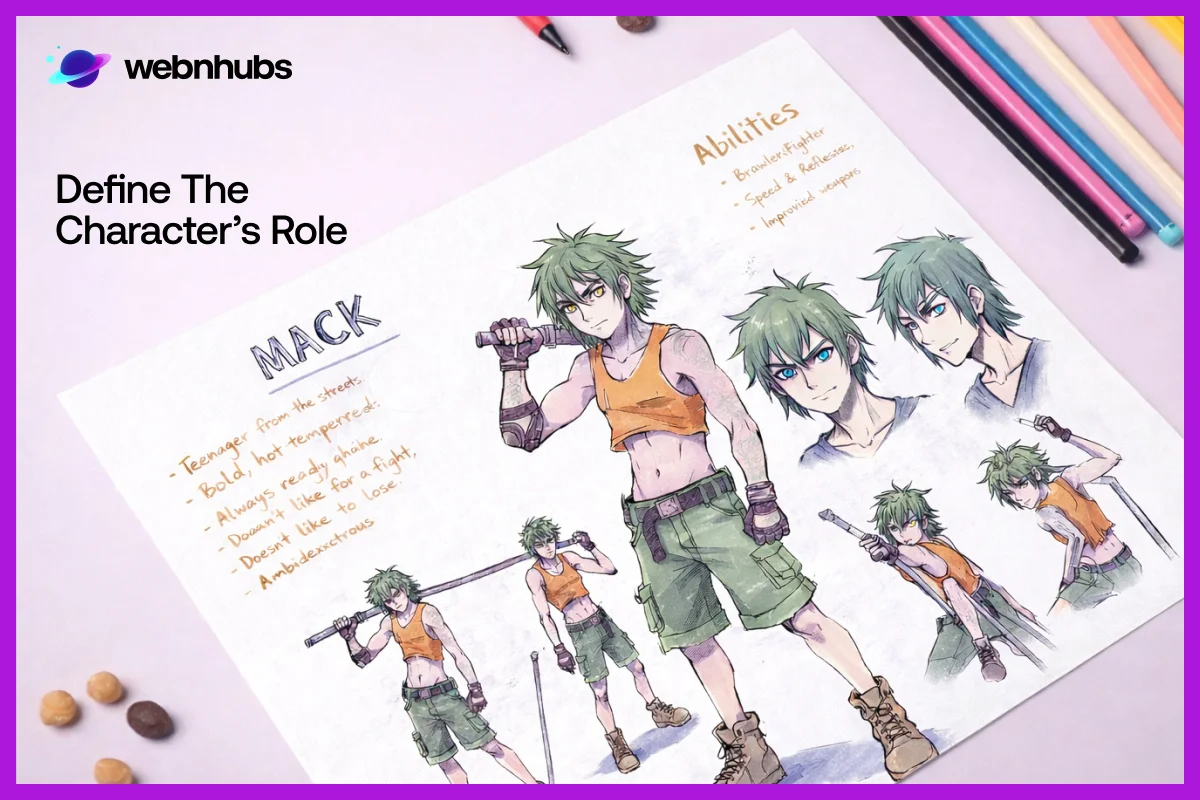
All characters have a purpose. Your design will be lost without a distinct role.
Ask yourself what is the purpose of your character. Are they the hero who is driving the story? A bad guy making trouble? A helping hand or a joke? Even background characters must be clear, as they still have a role and this role affects their appearance and their actions.
For example, a hero can be quite harmonious and familiar. They could be designed in a simple, friendly, and easy to relate style. Instead, a villain may be more defined, dark in color or an exaggerated shape that is tension-inducing.
That is the essence of the character design definition that design never works against purpose. When the role is clear, every visual decision becomes easier.
Know Your Audience
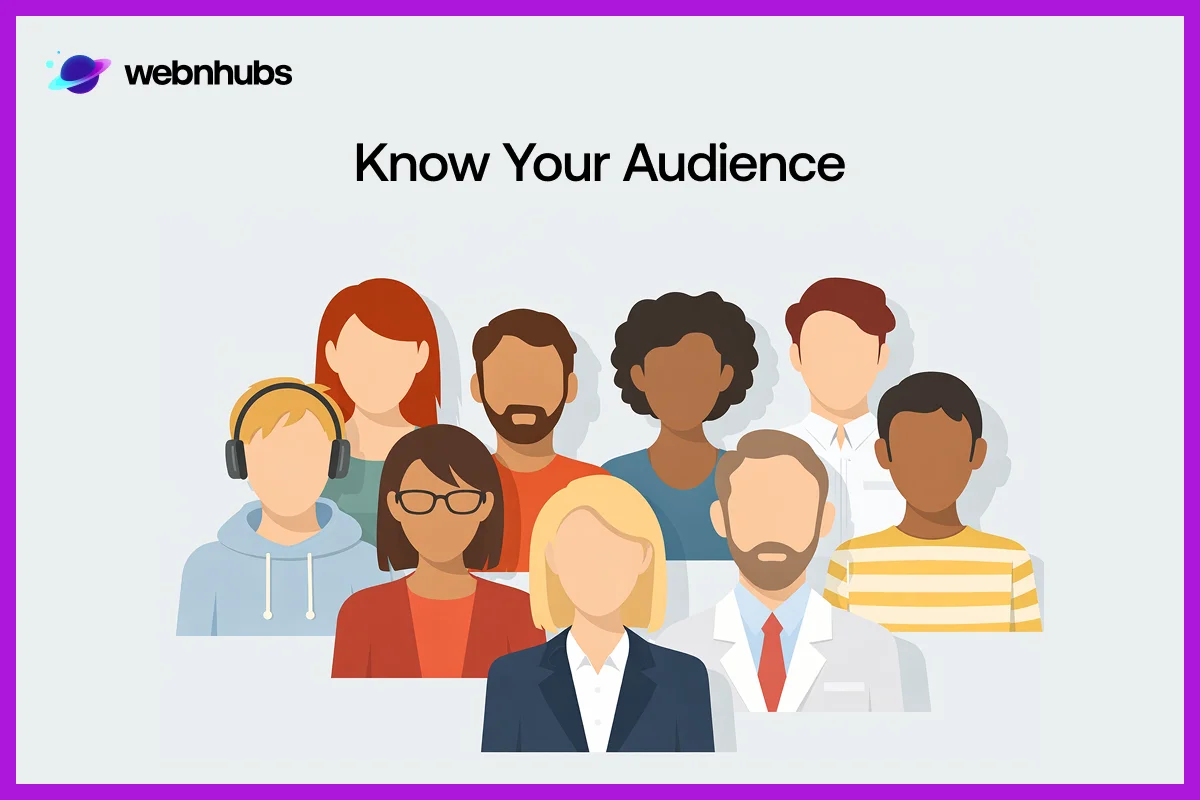
See, a character you make for a children cartoon is not going to work for adults. This is the reason why you have to know your audience before you begin designing.
When you are creating children’s characters, you have to use bright colors, softer lines and friendly faces. This makes characters look safe and friendly. For teens, you must try adding more style, and trends. In the case of adults, add more realism, and depth.
This is even more important in designing game characters. A character of a mobile game should feel simple and easy. Whereas, a dark or mysterious character will need more detailing and realism.
The first step in how to design a character requires enough knowledge on which character can communicate. When your audience communicate with the character, your design becomes a success.
Character Personality & Backstory
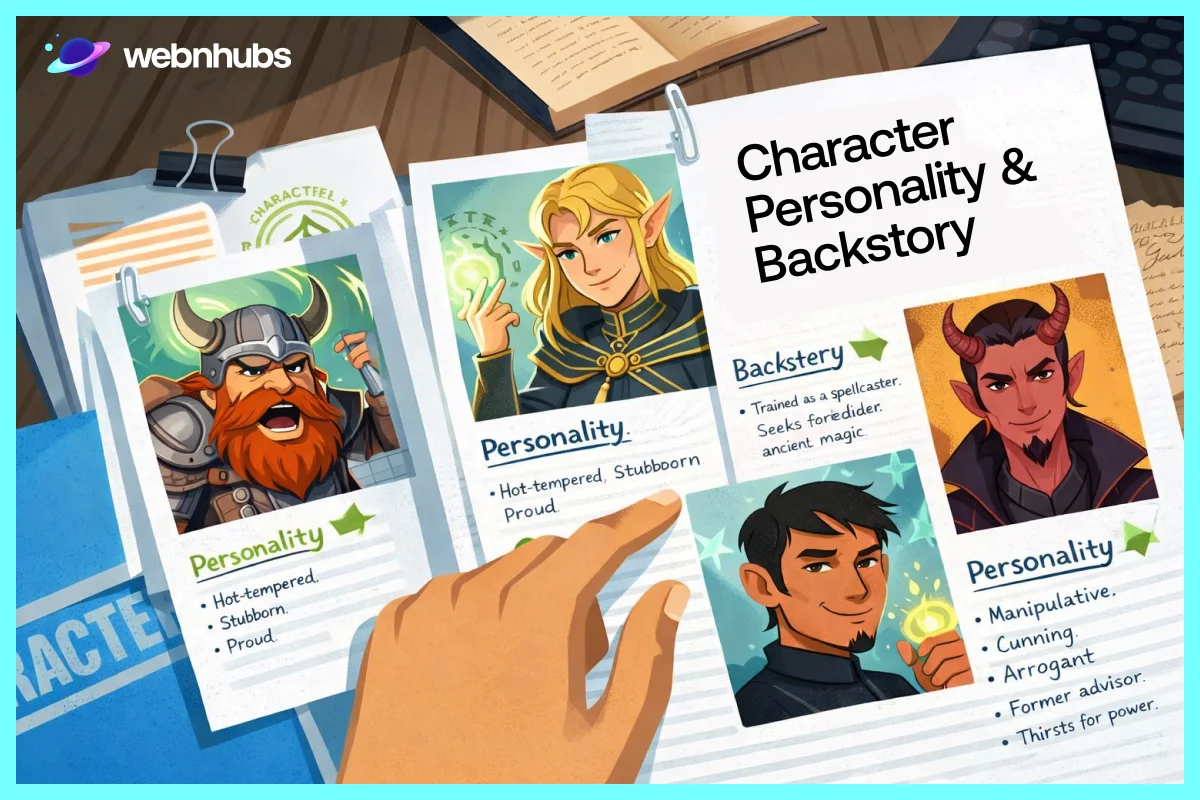
This is where your character comes to life.
Take time to know your character before drawing. What do they want? Are they scared of something? What is their life like?
The back story of a character affects everything including posture, clothes and facial expression. A leader will have an open body language, whereas a shy character will have a less stern posture.
By focusing on these little details, you can actually learn how to design a character. These little details could be a scar, hinting an old conflict. And sometimes, people use shabby clothes to show hardship.
That is how a rough idea turns into a powerful character concept. When the design has a personality, it looks like a person, a living one.
Visual Design Basics
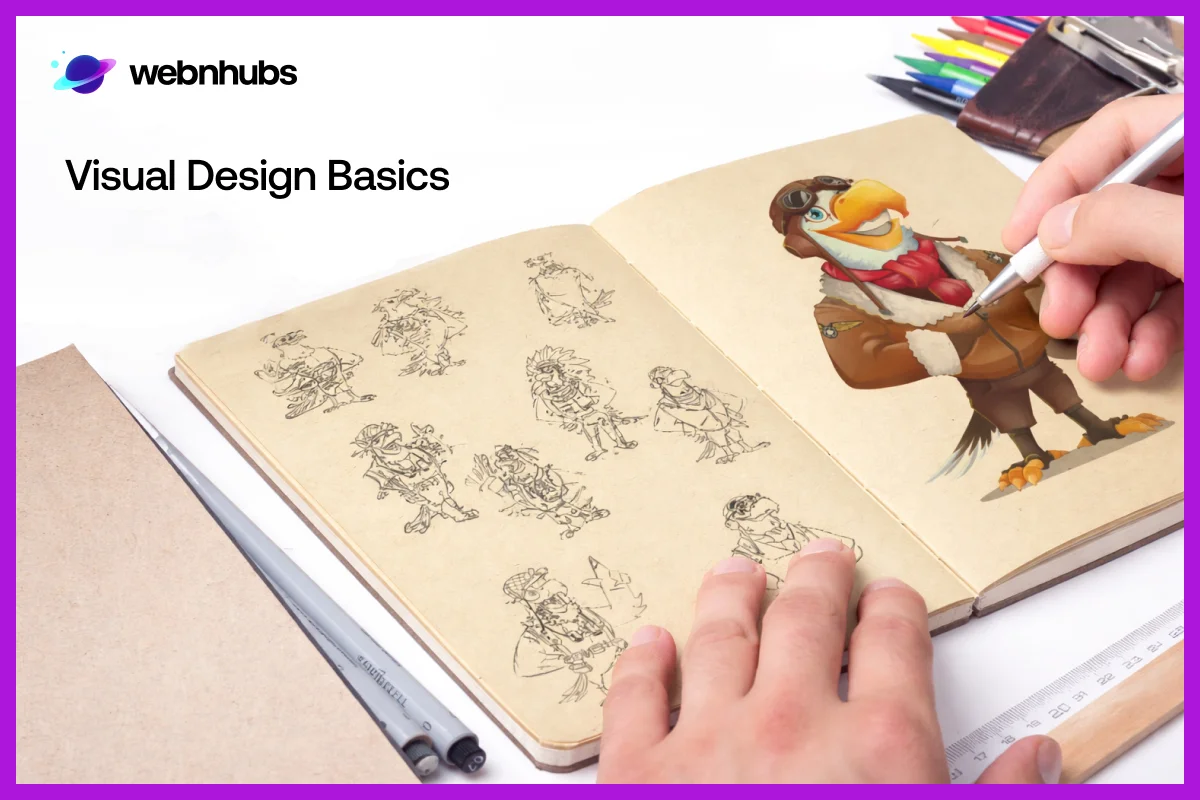
When you are sure of your foundation, then you can start with the visuals. This is where your ideas turn into visuals your audience will see on the screen.
Silhouette & Shape Language

When one learns how to design a character, the most important thing becomes making a character recognizable even as a shadow.
Here comes the power of choosing the correct character silhouette. Even if take everything out, leave it either black or white, people must be able to recognize it. If this is not the case, it means your character design has issues.
Other than silhouette, shape language also matters. Different shapes convey different emotions. The round shapes feel safe and friendly, square shapes look firm and triangle feels threatening.
According to a research, characters with unique shapes and costumes are 80% more memorable and engaging.
That’s why powerful silhouettes are important elements of character design. They make your character memorable.
Proportions & Anatomy
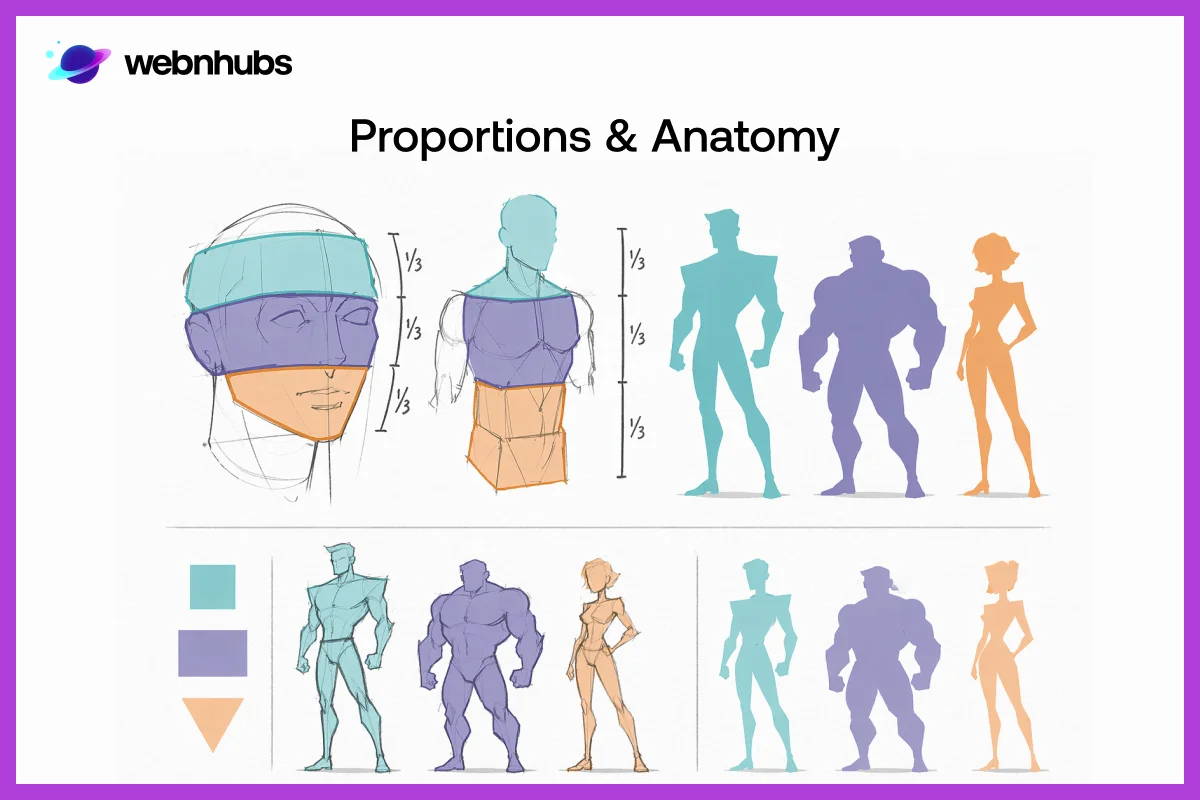
You need to think about proportions and not perfect anatomy when you are learning how to design a character. When the proportions are realistic, it leads to beautiful stories and realistic games. Even a slight change in expression feels exaggerated, making characters look expressive.
For example, a character with soft huge eyes will look sensitive. A character with large head on a small body will look unique, but also cute and friendly.
Many think that exaggerated proportions are design errors but that’s not true. Sometimes, they are what audience appreciate in character design for video games.
Color Psychology
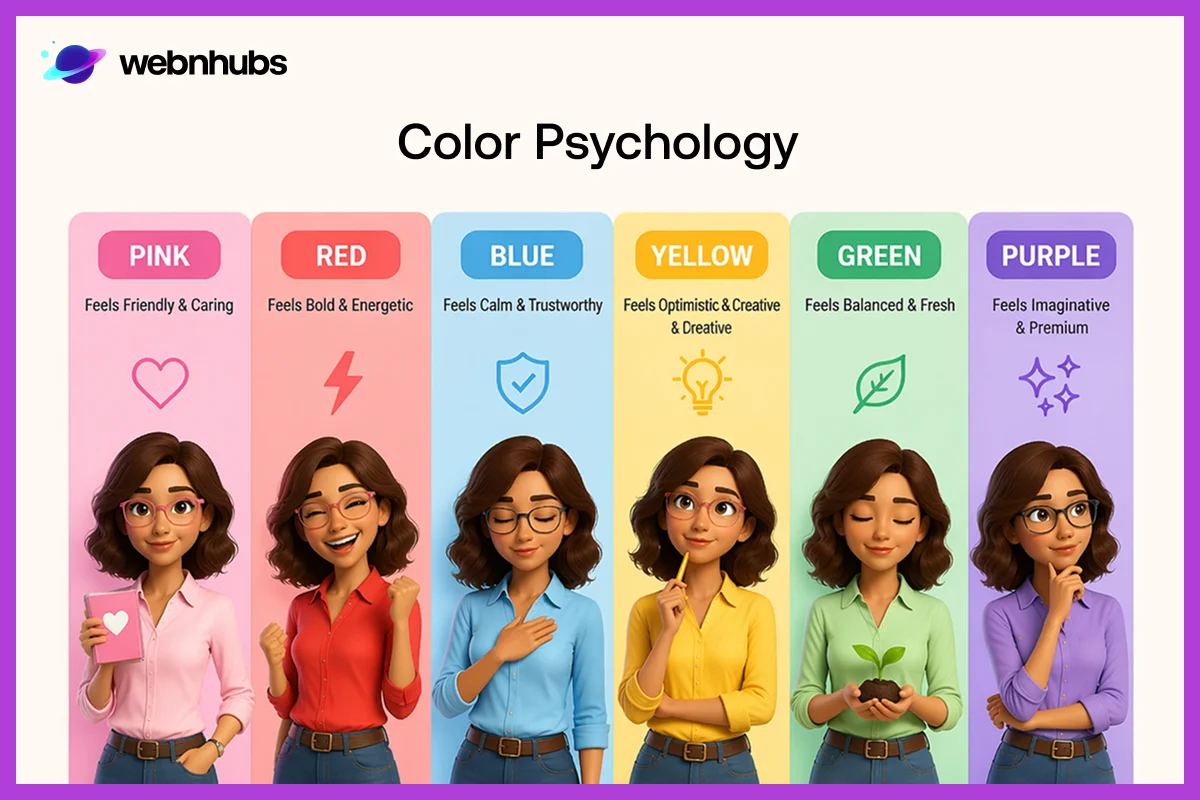
Be it a child, an adult or an old person, everyone would prefer colored characters over black and white. It is because colors hold emotions and they also evoke emotions in other.
Before understanding what, the story is about or what the character feels like, colors hook audience. Each color delivers a different feel.
Is it not true that blue and green has a cool feeling than red and orange which is sign of passion and anger?
Other than silhouettes, colors stand second in gaining engagements.
The trick is to remember to keep your palette simple as too many colors can be messy and confusing. The majority of powerful characters have a narrow palette of two or three primary colors.
Having a clear color scheme is a smart choice as it adds uniqueness and clarity to your designs.
Facial Expressions & Features

It is in the face where emotion resides.
An attractive face speaks volumes in itself. Minor alterations in eyes, eyebrows, or even mouth can totally alter the perception of a character.
Characters that are strong usually possess a single characteristic that can be identified. It may be a distinctive hairstyle, or scar, or eye shape, or even a particular facial expression.
These facts make the audience recall the character. They eventually become a part of the character.
Bring Your Ideas to Life
Create unique, engaging characters with Webnhubs that make your brand stand out and connect with your audience.
Clothing and Accessories
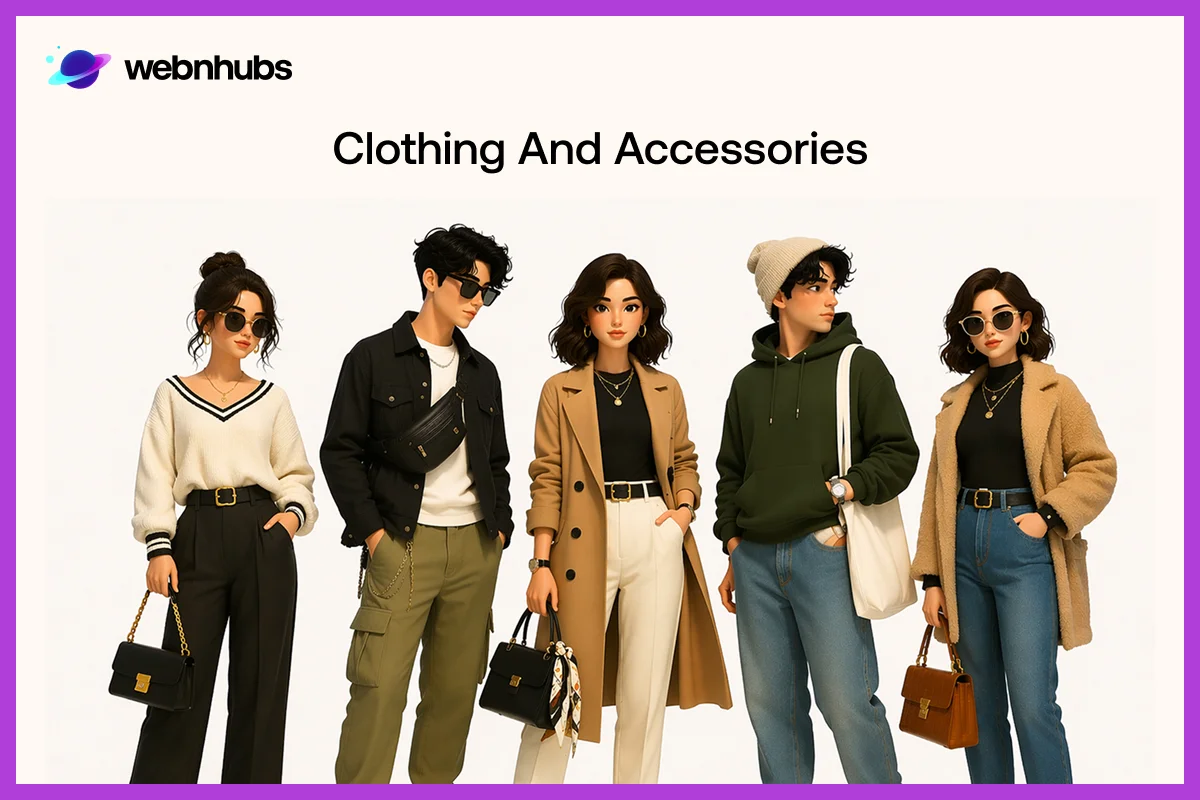
In character design, costume and accessories work as a silent communication tool. A good character design clothing can tell the personality, background, and the status of a character. That too without any caption or words.
The choice of clothing, such as the fabric weight or how sharp the accessory feels tell a story. For example, bright colors with loud patterns can be a sign of an outgoing personality. Dull tones and baggy attire can indicate a shy or an introverted personality.
Character clothing needs proper research in the process of how to design a character. It can show the profession, social status and climate that characters live in.
The accessories, such as jewelry, specific equipment, or special headwear enhance the image of a character.
With these two, character designers can cause emotional shifts. They also change according to the story and its requirement.
Iteration and Sketching
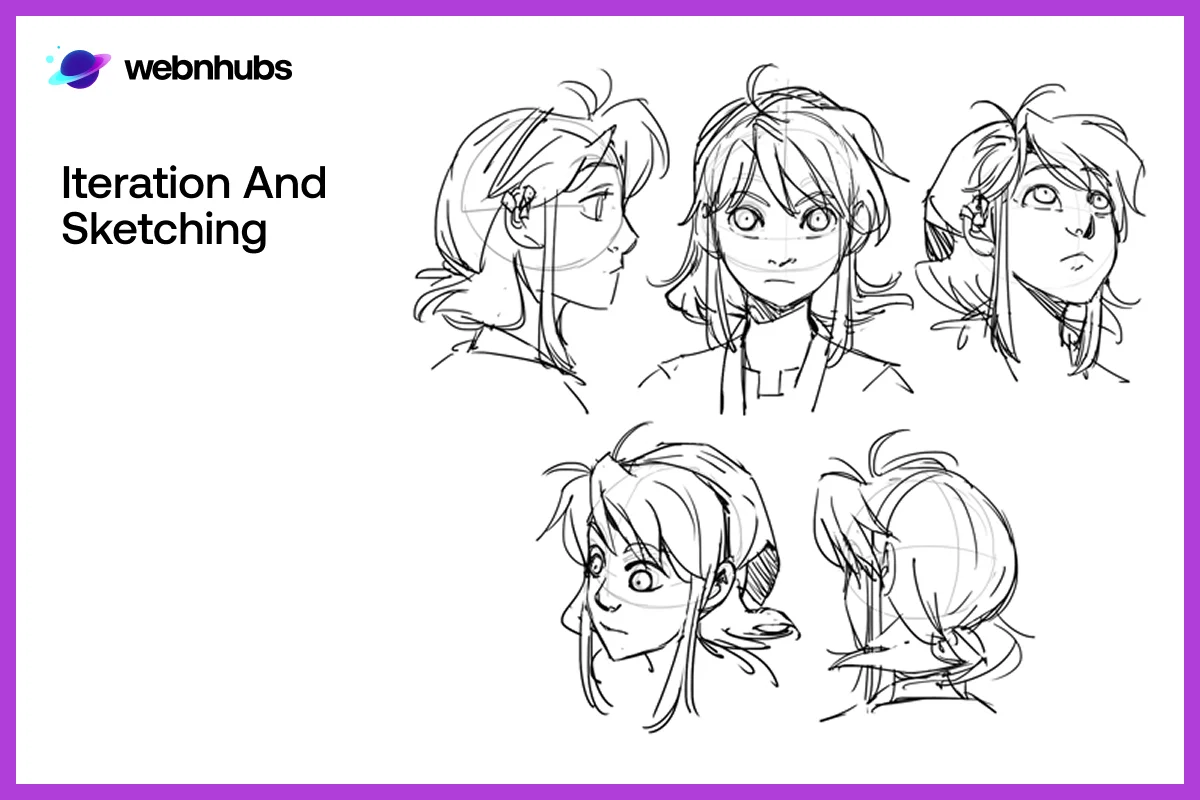
If you think you know how to design a character by now, you are mistaken. People beginning to design character often disregard the fact that you can do it in a single attempt. It needs proper series of iteration and sketching.
Start with basic sketches and then test them. When you end up with multiple versions of it, you can play with figures, angles and fashion style.
Try not to stick with that one idea you started with. It is important to add details, adjust proportions and experiment with silhouette.
It takes numbers of versions to finalize one. This process may sound hectic but that’s what differentiate a professional character design from a crude one.
Turn Rough Ideas Into Standout Characters
Refine your sketches with Webnhubs and transform simple concepts into unique, eye-catching character designs.
Digital vs. Traditional Character Design Approaches
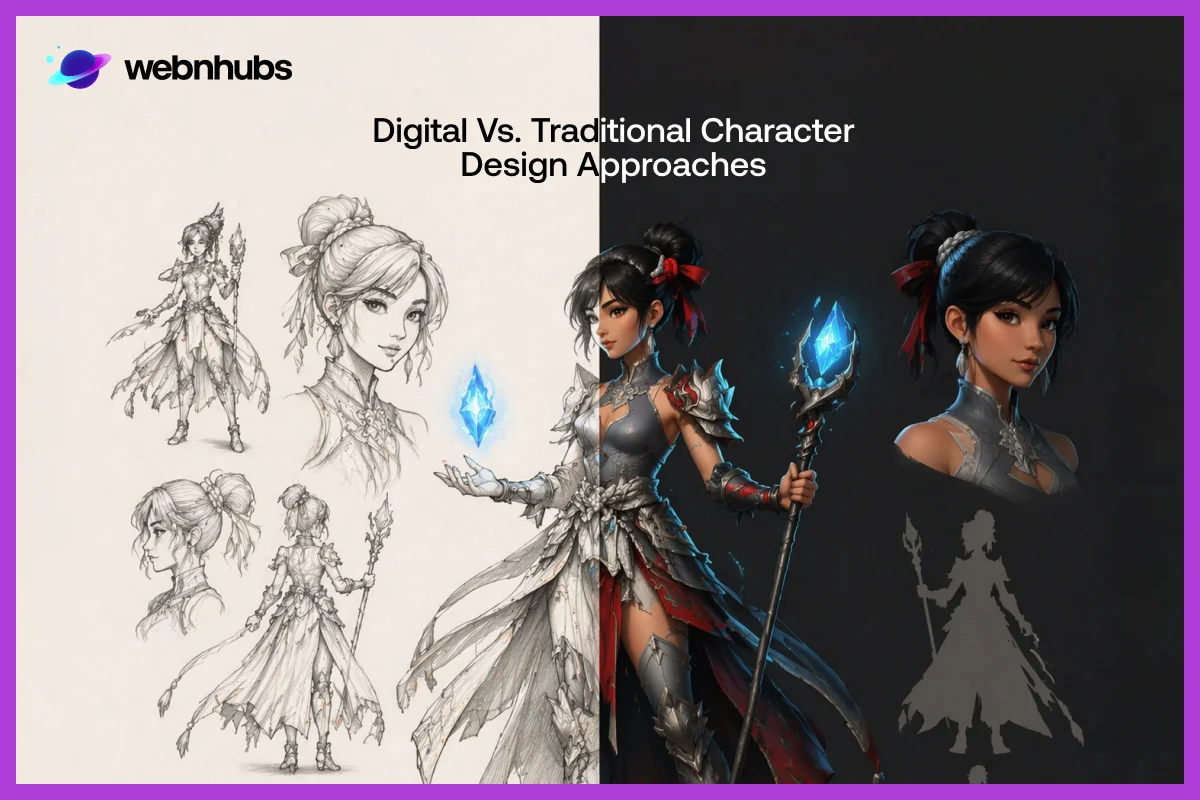
The advantages of both the digital and the traditional approach cannot be compared and neither is superior to the other.
Digital tools are fast, flexible, and are easier to manage. They are popular in both video game and professional workflow character design. You can use digital tools to easily make changes and enhance your final results.
The traditional approaches help in developing solid basics. They are focused on hand skills which is why there are no shortcuts to it.
Though, one saves time while the other takes time, both have their own pros and cons.
To make character designs that stand out, one needs to study both the approaches. The mix of both often leads to wonderful outcomes, satisfying every kind of audience.
Tools for Character Design
You do not have to have any special equipment to begin creating a character. Your plain pencil and paper can do a lot. It is fast, simple and allows one to visualize ideas without thinking too much.
When you prefer to work online, programs such as Procreate or Photoshop can simplify everything. You can experiment with colors, easily make corrections and perfect your design without having to start over.
In case of games or animation, such tools as Blender can assist in transforming your character into a 3D model. This comes in handy when you wish to view your character in all angles.
A combination of the two is used by most designers. They draw and then go to digital to refine stuff. It is not the tool; it is how you make your ideas come to life.
Add Life to Visual Characters
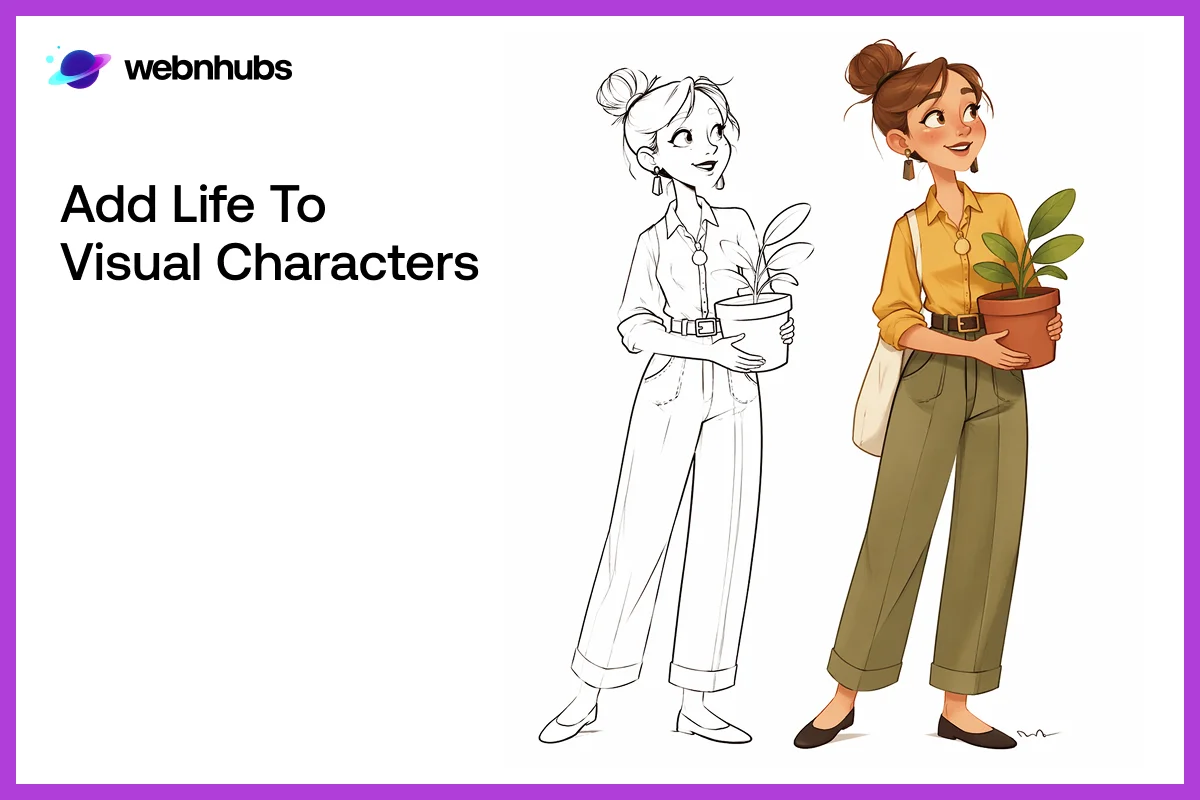
Real character lives outside the frame. It feels like they have a life of their own that they will continue to live even if you don’t watch them.
To add life in a character design, you need to stop being an illustrator and start being a storyteller. It is important for everyone in the journey of how to design a character know that imperfections should not be masked.
A worn cloth, coffee stains, or a bruised knee adds life to character. Even a bulging pocket, a sentimental locket, a strap that literally digs into the shoulder with the weight of a bag, all these things turn a mannequin and into a human being.
It is the emotions, habits and conditions that also need designing.
Poses and Movement
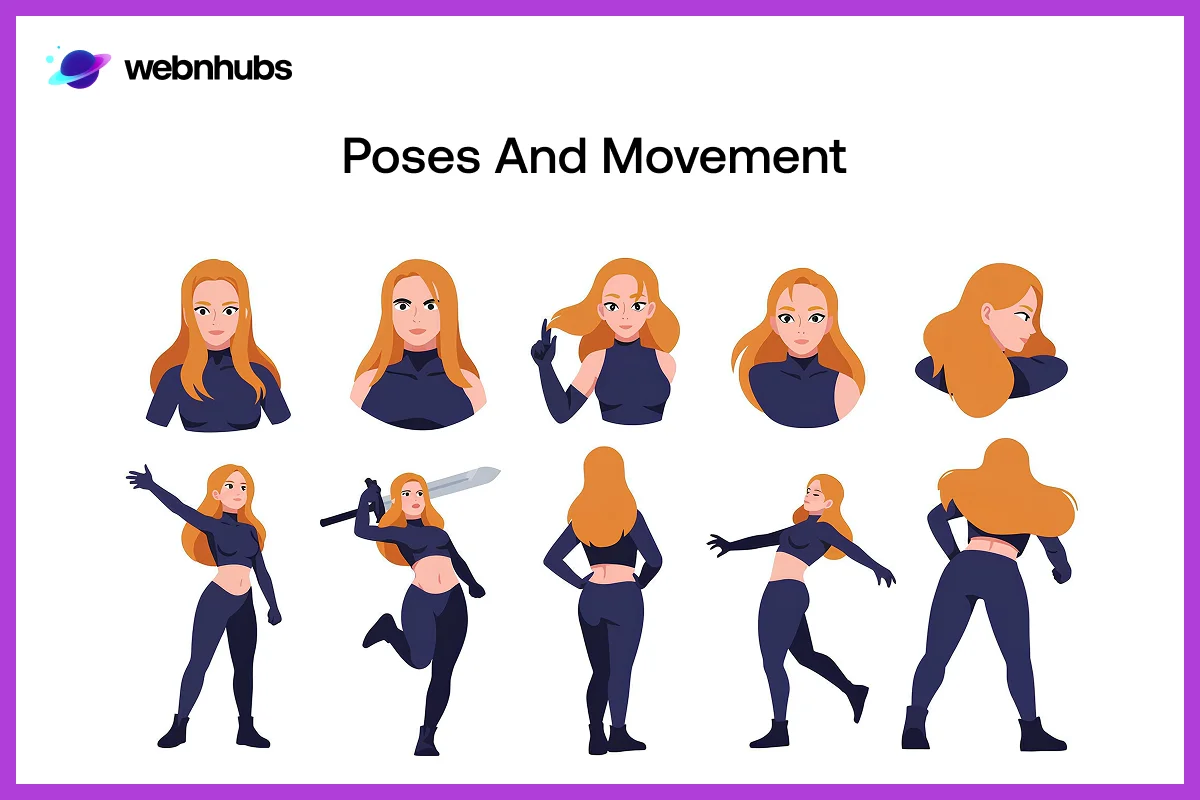
As a designer, you must know that a certain pose can tell a lot about a character. It is a choice that you add according to the narrative.
Each position is a decision that you are making as a character.
- Do they feel safe, which makes them relaxed?
- Do they seem vague, are they hiding something?
- Are they leaning forward because to enquire or they are going to take a step?
Even pose speaks, but silently.
This is where a lot of designs go generic. They show the appearance of a body, not what it is thinking. Imagine your character in ordinary situations, for example, waiting, listening, reacting, deciding. In ease pose and movement, you will find something which makes them unique.
It is that sincerity which breathes life into your character design process.
Expressions and Emotions

Emotions are not often demonstrated in an ideal, textbook manner. Nor should your character personality. Authentic feelings are chaotic. They overlap. It is possible to smile even when one is nervous.
Make characters that do look relaxed while hiding anger. Make them laugh in a way that is loud and discomforting. That’s how you add complex emotion because that’s what people show emotions in real life. They are not apparent but hidden.
Rather than sketching expressions in the form of faces, imagine them as responses to moments.
Ask yourself:
- What just happened to them?
- What are they trying to keep a secret?
- What is it they feel that no one knows?
In doing so, your work will no longer be on the surface level of design. Instead of sketching faces, sketch state of mind.
And that’s how a good character design is turned in to perfection.
Story Integration
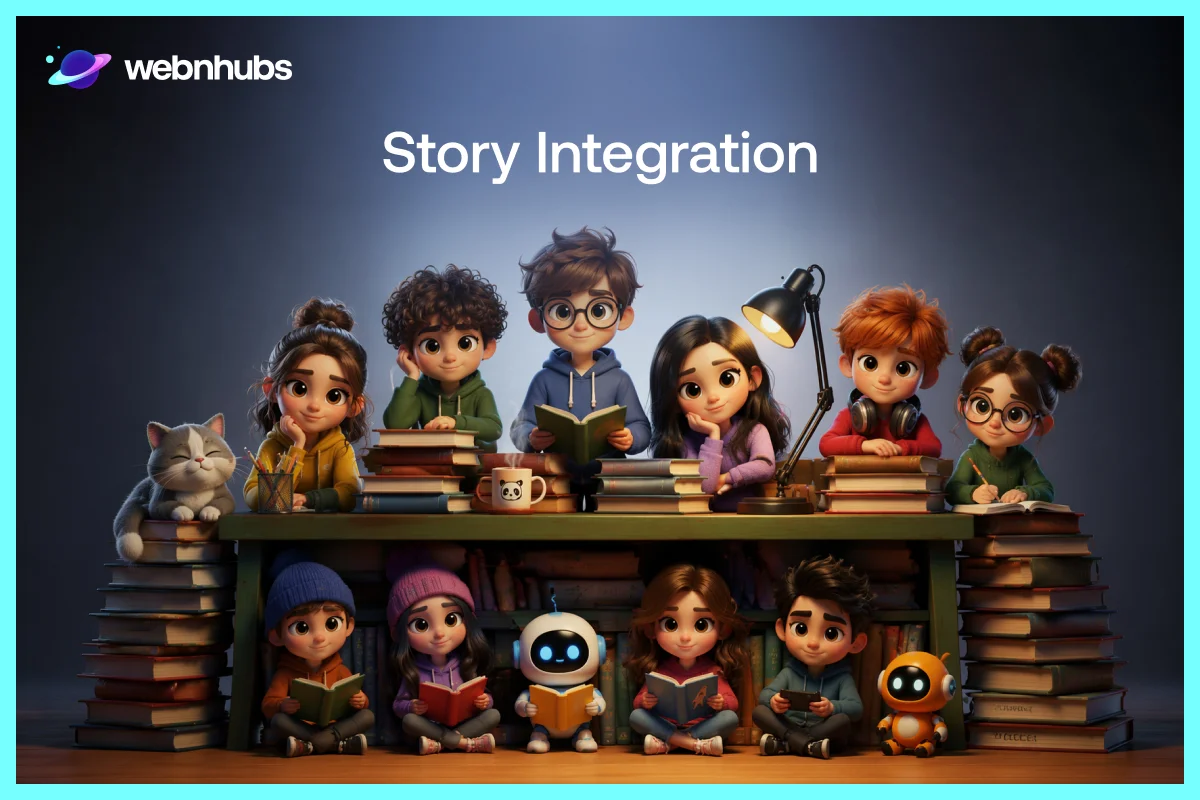
A good character does not only fit in the story but carries the whole story. The character should be designed in a way that when someone looks at it, they sense of the world around it.
Not completely, but get the hints of it.
To do this, it is important to focus on every design detail, the dressing of the character, how it carries itself, movement, and expressions.
It’s like if you show someone the character behind a plain background, they speak of the story itself.
Story integration means adding a backstory through design details. It could be an old scar that shows struggle or a serious face showing wisdom.
Adding a background story to visuals holds so much importance in video game character design. The reason is because in games, character is in constant contact with the environment. They are designed with motion, behavior and realism in mind instead of just looks.
Key Errors in Character Design Process
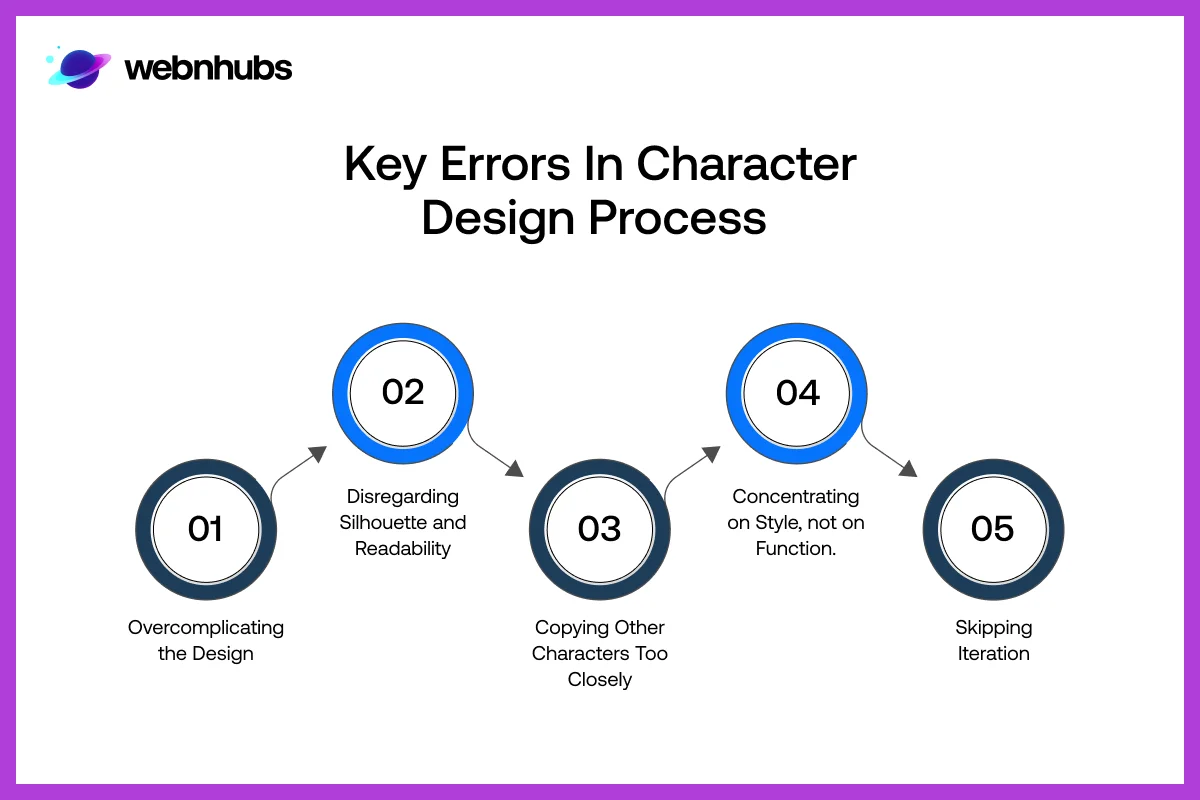
Even the most experienced character designers make basics mistakes which ruin the design. It is important to know each error that you can come across to save yourself from future frustration.
Overcomplicating the Design
Sometimes, it is adding too much detail, and everything at one which makes it difficult for audience to read the character. It could be the use of too many visuals at ones, or even the minor issue like bad angle. Instead of focusing on the quantity, work on the quality. Look for the things that can complement the character and add to your story.
Disregarding Silhouette and Readability
A wonderful personality must stand out even in a distance or in a single look. A poor design is one that loses identity without color, detail or context. Silhouette testing the shape of the character in black and white is a way of seeing whether the character can be read at a glance. And not just this but definite shapes also convey personality quickly, as soon as a character moves or talks.
Copying Other Characters Too Closely
It is ok to be inspired, but copying kills originality. Characters should have unique features. Do not borrow iconic characteristics of popular shows and design around it. Rather focus on what makes my character different from all.
Concentrating on Style, not on Function.
A character who is visually attractive and is out of place can harm engagement. Always think of how the characters will operate in their world. How would they walk, run, or fight? This helps you with getting the right motion.
In character design, style does matter but not more than performance and story.
Skipping Iteration
One major error is when someone draw a rough sketch and try to finalize it. You can’t excel with a bare idea; you need to refine it. The first few sketches rarely work. It is important for someone who is learning how to design a character to experiment. Try to perfect yourself using tools and techniques.
Once you start creating like this, you will face results that you’d never in your wildest dream could hope for.
The Effect of Character Style on Engagement
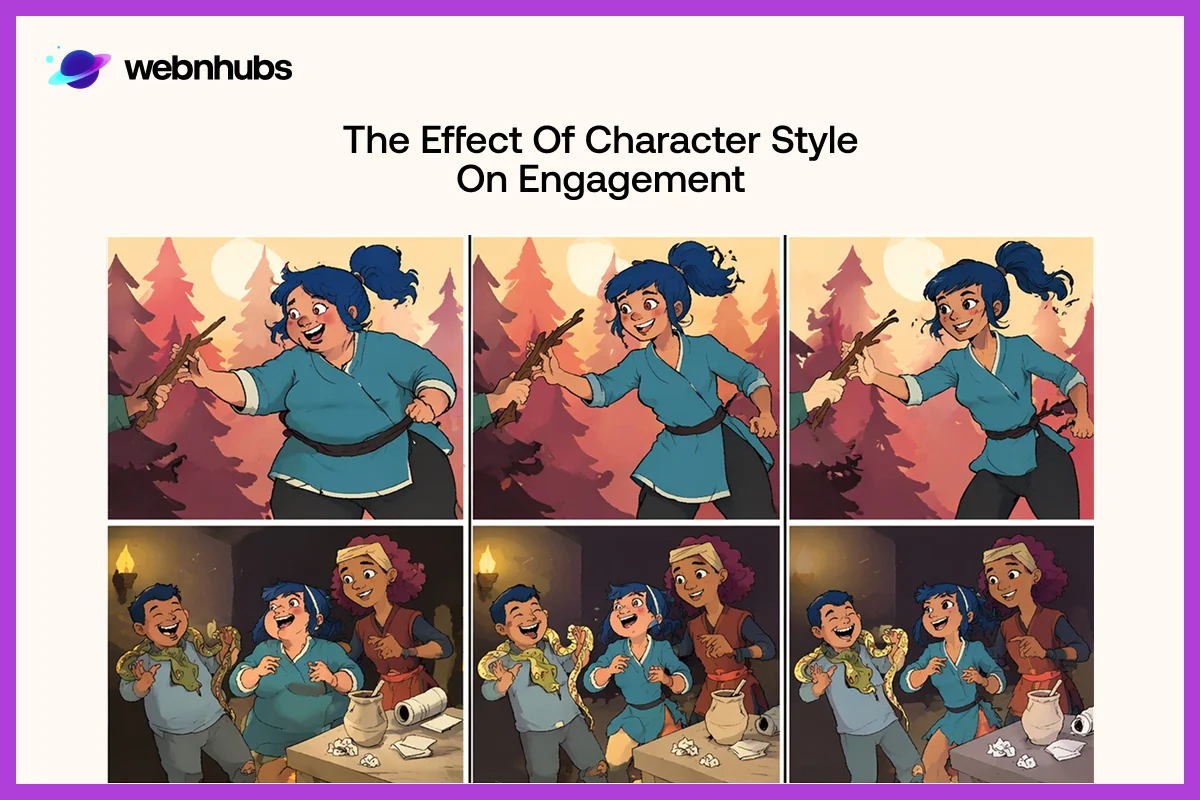
A recent study by Kaiser et al. (2025) indicates that both the cartoon and humanlike virtual characters can increase engagement but in different ways.
In some cases, cartoonish characters work better than humanlike as they are more expressive, more friendly and emotionally appealing. Human like characters develop trust and work better in situations where realism and skill are needed.
To designers, this shows how character style must be aligned with the purpose of the campaign. Choosing the right character can directly affect the way viewers interact, connect and even make purchasing decisions.
Finding Inspiration and Being Curious
You need to be observant in order to create something. It requires creative minds to design something that stands out. The most successful character designers are the ones who observe, do research and do experiment. They find motivation and idea in everything, even when a leaf falls from a tree.
See the Real World
There is lesson in everything, be it a gesture, posture and an expression. Artists who take time to draw come up with more expressive and natural characters. This is because they think of every little movement and body language. For example, they will observe a person playing with hands and it will motivate them to create something unique.
Learn from Tutorials and Courses
There are websites like MasterClass, CG Spectrum, and Clip Studio that teaches how to design a character. You can learn a lot about anatomy, proportion, color theory, and character movement through them. Webnhubs is open for discussion as well, just send a message.
Designers who study through blogs and videos become proficient quickly. It is true that even a brief tutorial can help you come up with an idea that you might not think of on your own.
Keep Mood Boards and References
Gather photos, color scheme, textures, and ideas of costumes. According to an article by Steve and Deana, artists who use mood boards generate more original and consistent designs. The reason is access to visual library who opens the gate for number of ideas.
Patterns come naturally over time, directing choices on color, shape and style and keeping your designs unique.
Always be curious about learning. Be curious enough to question and think about everything, even a drawing on the wall. The more you open yourself up to the world, the more living and original your characters will get.
Conclusion
The process of how to design a character was never about shapes and colors. It was and is still about ideas, imagination and story.
Every little detail matters, be it a gesture, a unique pointy feature, a specific movement. Each turn adds a different perspective.
Up till now, we have so many unique and memorable characters. They never existed on piece of paper, but through number of revisions.
Character design must stay in the brain, it should provoke desired emotion, and resonate with people.
As a designer, you need to have a curious mindset to create polished character designs. While designing, have a story in mind then decide how would you like to see it. If you make that happen, others will see it too.
Your Ideas, Our Imagination
Your narrative needs the recognition it deserves. From initial sketches to final polished characters, our character design steps are quick and seamless.
Let us help you turn your raw narrative into memorable, expressive and unique characters. Call us now for premium and affordable services!
Frequently Asked Questions
A character exists within a greater universe. Consider tone, setting, and storyline. A future hero will not fit in a fairy-tale of the Middle Ages. All these details: clothes, color, shape must seem like they are a part of the world you are creating.
Absolutely. Small details, like a scar or gesture, a favorite accessory, are those that can stay in the minds of people more than anything else. These minor details help people recognize the character in one single glance.
You desire your character to be new and yet familiar to its genre. Trends, but twist, in study. Incorporate character, plot clues, or visual punches that will make your character stand out, without losing your readers.
Yes! In games, animation, or long stories, a character evolves with time. It develops with new experience and emotions. When the story takes a turn, character costume, motion, and style also change.
Pros typically begin with research, mood boards and sketches. Professional focus on how a character functions rather than how it looks. They focus on movement and story side by side without ignoring anything deliberately. A hobbyist design with heart but might not know how to design a character that stand out.

Hafsa Hanif is a talented content writer at WebnHubs, specializing in topics such as graphic design, web design and development, logo design, and animation. With her deep understanding of design principles and creative processes, Hafsa crafts engaging, informative, and SEO-optimized content that resonates with readers. Her expertise in SEO ensures that her articles not only captivate audiences but also rank well on search engines, helping businesses boost their online presence through compelling design-focused narratives.
