- Website Turning into a Ghost Town
- Strategic Web Design Converts Visitors into Leads
- The Agentic Shift: The Websites as Active Sales Agents
- The Secret to 2026 Leads: Psychology-Driven UX
- Technical Strategy: Speed as a Revenue Pillar
- Importance of Strategic Web Design in Long-term Business Value
- Data Driven Design: Use Users Insights for Better Outcomes
- Align Your Web Design with Technical SEO
- Conclusion
Most companies spend a lot of money on search engine optimization in order to generate traffic in their websites. They create posts on their blogs, work on keywords, and optimize rankings but forget to focus on user experience which drives away users. In strategic web designs, these friction points are handled carefully.
There are behavioral triggers like clear menus and bold CTAs which guide users to the next steps. Strategic web design requires both UI and UX to help business expand. This means, designers must design with business intelligence (BI) in mind, simply means business data and strategy.
Website Turning into a Ghost Town
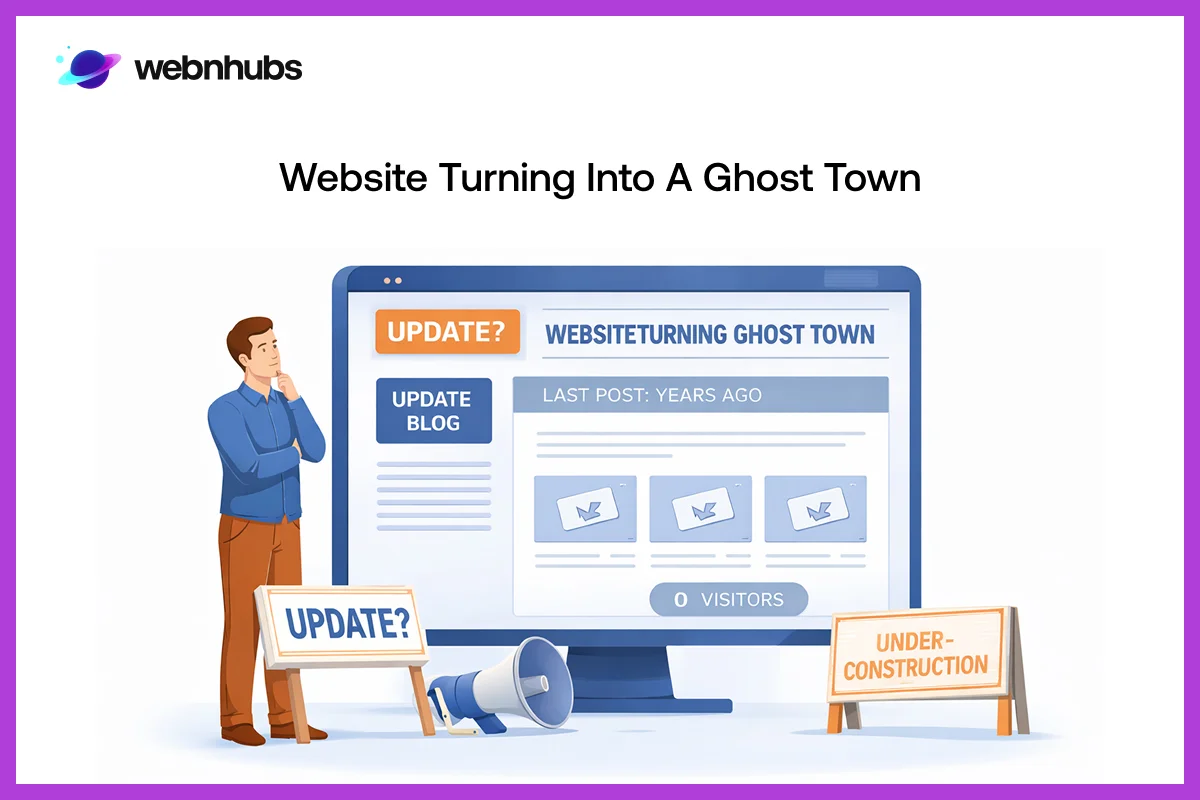
Each day a website receives visitors but only few of them take any action. They do go through pages, read, but then scroll and move on.
This leaves what many marketers term a ghost town website. It appears to be active in reports yet it generates very little actual value to the business.
It is not usually simply a matter of traffic. In the majority of cases, the site just does not lead the visitors to the next step. Even interested users do not linger without a guiding hand. This is the reason why companies have turned to strategic web design rather than the number of visitors.
Strategic Web Design Converts Visitors into Leads
The best thing about strategic web design is that it is designed with a purpose in mind. Each page is created to lead the visitor to significant action.
The site helps customers throughout their path, rather than merely providing information. Visitors know what the business provides, how it can benefit them and what is the next action to take.
Websites are not digital brochures any more when business objectives are used to inform design decisions. They turn into platforms promoting the conversion rate optimization (CRO), more leads and long-term growth.
Such practice helps businesses lower traffic wastage and enhance marketing outcomes. It all happens with strategic web design which fills the gap between SEO traffic and the actual results.
Quick vs Strategic Web Design: Which One Are You Developing?
There are quite a number of companies that create websites rapidly through templates. It is a fast way of launching them, however, not always planned. The pages are created, information is added and the site is made live.
The outcome is typically beautiful website with no sense of direction.
The visitors might not know where to click or what to do next. The calls to action are usually not specific, and the navigation is more company oriented than customer oriented.
Strategic web design operates in a different manner. It begins with the knowledge of the target audience. Designers think about the way the visitors search information, what issues they are seeking to address, and what actions they attach the greatest importance to the business.
The planning assists in generating clear user journeys that guide the visitors through the web site naturally.
Quick Website Can Cost Your Revenue
On the surface, cheap websites appear to be a smart idea. They save time and minimize web design cost. But they do come up with unseen issues. For example, a tourists would not like to engage with a website giving confusing or generic experience.
When you make quick websites using free templates, you may end up investing more in the future because of weak marketing. You will end up spending a lot as a company to attract new visitors who do not convert.
Hence proved that strategic web design is important for long-term outcome and not for short-term savings.
With a planned site, it is possible to reduce the purchase costs, enhance the user experience and assist the visitors to navigate in the sales funnel.
The site does not miss opportunities, and it becomes a system to promote steady growth.
Wish to know whether your site is benefiting or hurting you in terms of SEO.
Contact Webnhubs to help you identify hidden gaps.
The Agentic Shift: The Websites as Active Sales Agents
For a very long time, websites were only used as company’s online brochures. They had data and some important information but no direction. Users had to solve their own problems and simply struggle a lot.
Nowadays, users are more demanding and strategic web design has jumped in a savior. Now, we have modern website that are easy to browse. Visitors can easily find information, compare and decide who to trust. It is all because of strategic web design which knows how and when to react to user actions and direct them to useful resources.
If you browse websites of some of the leading brands, the website will give you useful suggestions, related content, or examples. Why? Because these sites work as helpers which assist users in take further action and make the experience less painful.
User Intent Designs
With the new trends and technologies introducing every day, the designers are now creating websites with user intent in mind.
They understood the assignment well that visitors do not want to start all over again, they want to start from where they left. A feeling of relatedness.
Strategic web design resolves this issue as it uses the visitor’s information and change the layout information according to it. The websites are no longer stiff. Instead of arranging pages with company in mind, the website arranges it according to visitors.
This way, the visitors finally use a website, they stay longer, browse with heart and contact you with their own will.
For examples, a visitor entered into a website wanting to buy services. Now, a strategic web design will adapt to his intent, help him find resources, case studies, and service pages that will generate confidence.
The Secret to 2026 Leads: Psychology-Driven UX

Online visitors decide fast. When a site is too busy or seems intimidating, users simply move away in a few seconds’ time.
Strategic web design is concerned with clarity and simplicity. Information is easier to comprehend due to clean layouts, readable text and considerate spacing.
This strategy makes the visitors have less mental work. Rather than trying to find an answer, they soon get to notice what is important.
Designers tend to direct focus to such significant steps like reaching out to the business, ask about information, or read about services.
When the experience is easy, visitors will tend to remain and explore more.
Establishing Credibility with Real Evidence
There is a huge role between trust and online decision making. When a visitor comes, they want to be convinced that a business is trustworthy before they can share information or purchase.
The strategic web design entails having various trust signals on the site.
These can be customer testimonials, project experience, reviews, and partnering with clients. With a performance-first design websites, you can make visitors feel secure about the business.
With trust indicators placed at the right times in the user experience, they eliminate doubt.
Visitors also start to perceive the site as not only informative but also credible and reliable.
Small Change, Big Impact
It can even happen that the output of the same SEO traffic doubles when you manage to enhance your strategic web design.
Technical Strategy: Speed as a Revenue Pillar
Speed has already become among the most significant aspects of websites performance.
Individuals want web pages to open immediately. When a site loads slowly, the visitor would usually abandon the site before they can even read the pages.
Strategic web design aims to create quick experiences at the onset. Photos are streamlined; page layouts are kept minimal and irrelevant items are eliminated.
These enhancements enhance the speed of sites, making them desktops and mobile friendly.
Websites that are quick to load on any device or internet are also rewarded by search engines as they provide a good user experience.
Consequently, quicker pages can contribute to more powerful visibility and more involvement.
Mobile Browsing Is the New Way to Go
The majority of individuals are using their smartphone to access websites. This change implies that web sites have to look natural in smaller screens.
Strategic web design takes into account how individuals are holding their phones, scrolling through their pages as well as interacting on the buttons.
Significant steps must be simple to access without any unnecessary tapping or zooming.
The navigation and easy to read text make browsing to be comfortable.
Once the mobile experience is smooth, the visitors can be more confident to stay longer and to explore the services or products.
Work on Marketing: Make Websites Growth Engines
An effective website does not exist in isolation. It collaborates with marketing tools, email marketing, and customer platforms. Such websites help you gather all the important information about visitor behavior.
Companies will be able to track the pages read by the people, the length of time and the actions that they take. Such insights are useful in enhancing marketing and content planning.
When the website and its marketing are in sync, it helps brands understand better about their customers and their journey.
This enables the teams to refine messaging and have strategies that yield tangible outcomes.
Customizing the Visitor Experience
Not all visitors come with the same purpose. Some wants to explore or kill their time while some are ready to buy from you.
When you have a strategic web design, it knows what kind of information to display to fulfill users desire.
For example, returning visitors will see service details or case studies, and those visiting for the first time will see useful guides. This is what going to make the whole experience fun and motivating.
Remember, when the content is according to the visitor’s interest, they spend more time.
Importance of Strategic Web Design in Long-term Business Value
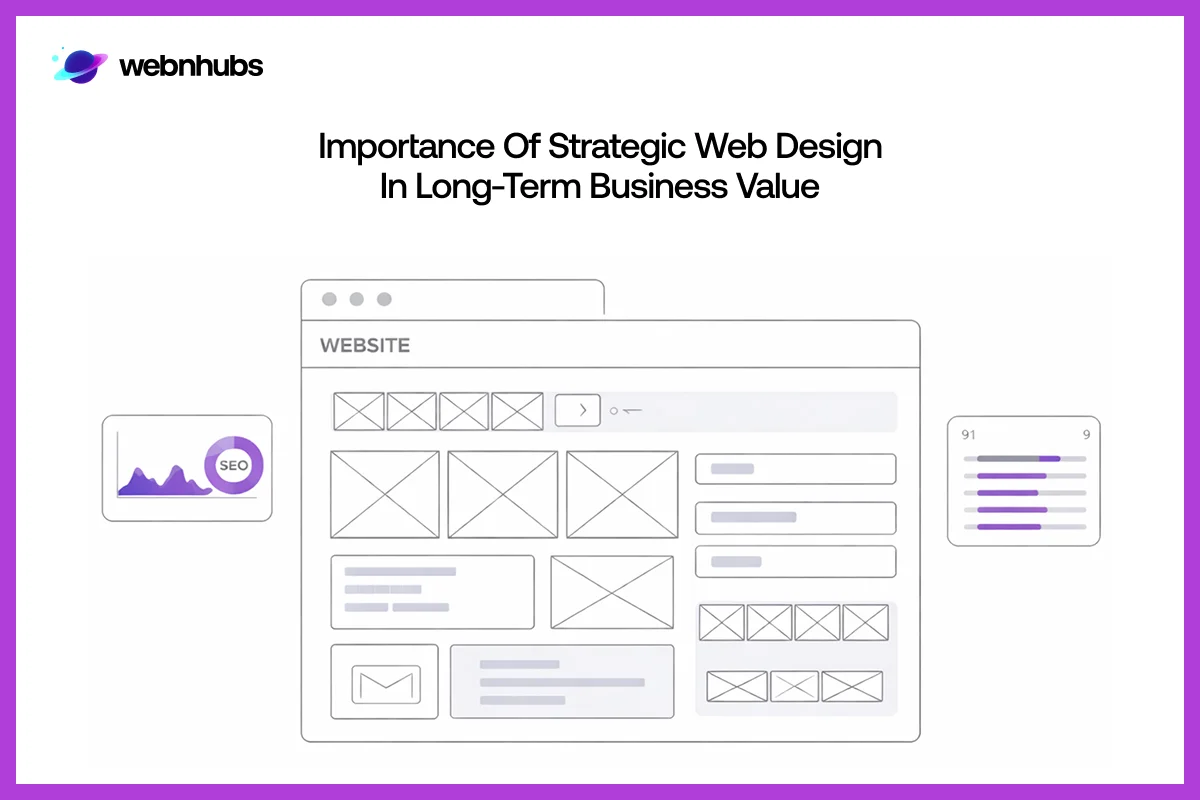
Your need to have a platform that works every day and all time. This is not possible with an offline or physical store. It is definitely not possible with a website that works in some hours of the day or night.
When you invest in having strategic web design, it comes with 24/7 operation. The website presents the brand, provides answers, and do the lead scoring all day and night.
This way, your website becomes a source of interaction which helps users proceed whenever and from wherever they want.
Creating a Digital Asset That Grows
The strategic web design also equips the businesses with future expansion.
When businesses grow, they usually introduce new services, resources and personalized content blocks. These changes are easier to support using a flexible website structure.
Companies do not need to restructure the whole site but can extend on already existing sites.
This saves time and also maintains the consistency and an order of the site.
Slowly but surely, the site turns out to be one of the most precious assets of the digital presence of the company.
Data Driven Design: Use Users Insights for Better Outcomes
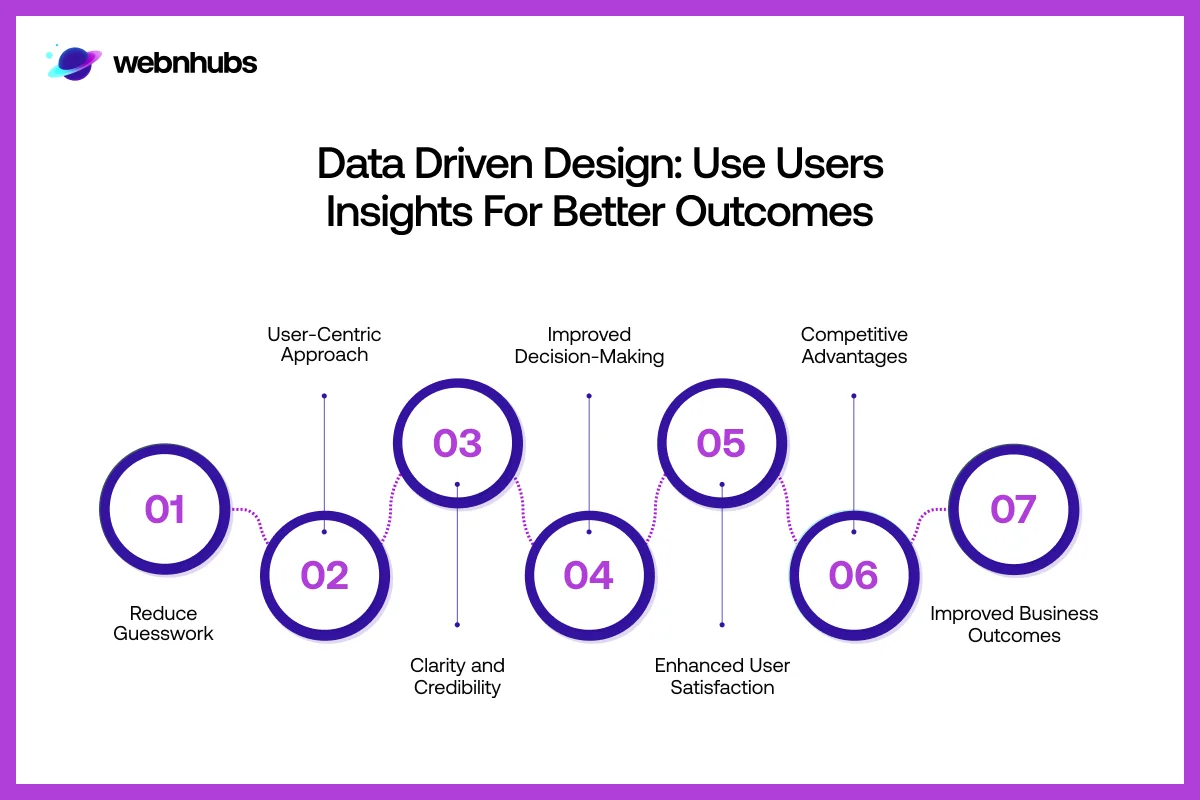
If you design and develop a website based on guesses, it won’t work long. It is very important to have a proper strategy. Each visitor contact works as a source of valuable data and there are benefits and ways to analyze that data.
When you check who has viewed your pages, stayed for how long, or things like bounce rates, you can improve your website.
For example, if you see a visitor on your website keep on leaving the pricing page information before accessing the “Contact Us” button, you consider it as a friction point. Now, you can use this insight to change the layout, content, or calls-to-action during strategic web design.
With smart web design, brands can become aware of user’s actions and their wants. All this data help businesses take required action which can automatically improve interaction, and predictive UX.
Continuous Optimization
There is no such thing as a finished website. Even after it is live, you need to maintain it and make changes to it. This applies to strategic web designs as well but the effort is less because they are already designed with users in mind.
For examples, once you launched a website and you see users clicking on different areas of the content blocks, you can now place your CTAs there. Likewise, you can also test headings, fonts, visuals and layout to make everything look and work perfectly.
When you have the will to make changes according to user’s reactions on your website, it helps you cut down the useless traffic. You can also optimize the cost of customer acquisition (CAC). And that’s not it, because it also helps you maximize each user’s lifetime value (LTV).
Willing to convert insights into additional leads?
Let Webnhubs analyze your web design first.
Align Your Web Design with Technical SEO
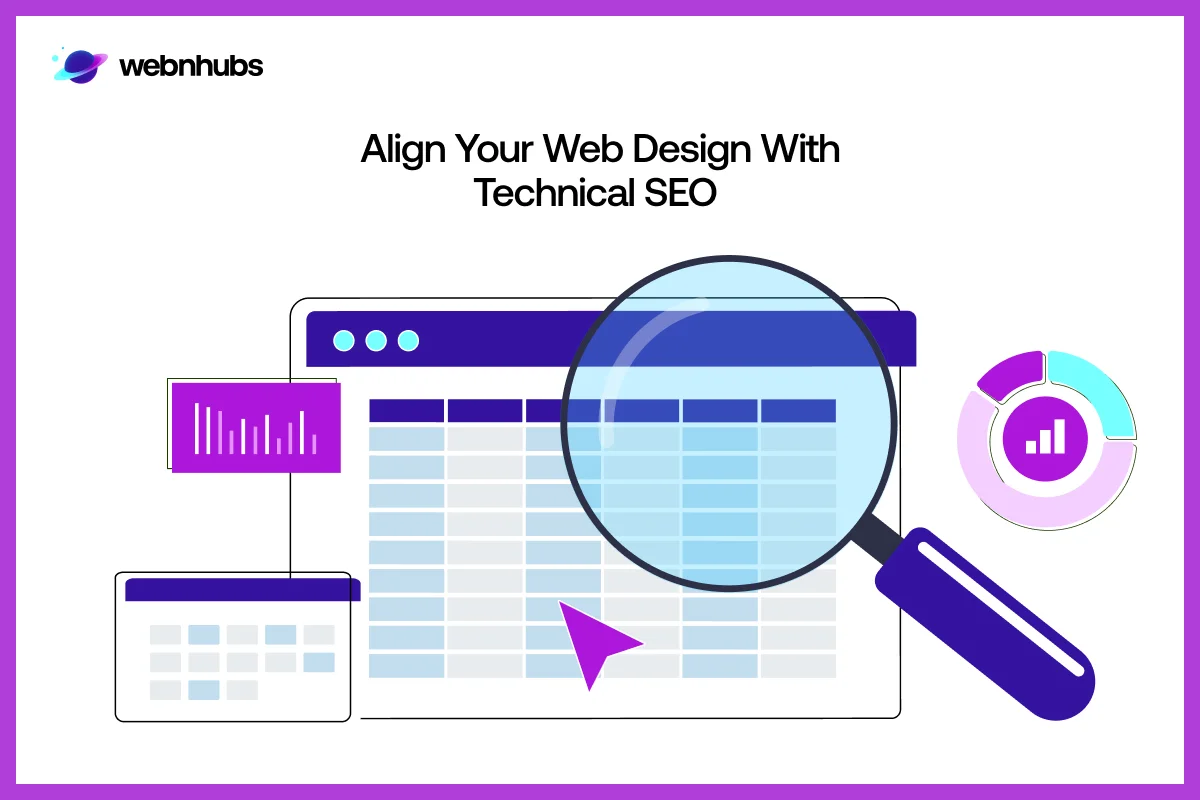
In 2026, the focus is no longer on keywords. To increase your ranking and improve SEO, you need to work on the structure and its flow. This is what going to help users and search engine easily understand it.
Better Structure, Better SEO
The strategic web design helps you with this as well. It provides you with the following:
- Headless CMS models help with quicker page loads. It gives you versatile updates on the contents, and make interfaces fit seamlessly on any device.
- org and structured data are no secret. They explain to the search engine what every page entails, enhancing its appearance in search results.
- Design-first approach which makes sure that the pages load fast. This improves both the rankings and their user experience.
This is an organized method of ensuring a business maximizes on SEO traffic rather than clicks by converting traffic into actions.
Linking UX With SEO Goals
You can’t choose from either good UX or good SEO, they are both important. If you aim to take your visitors through the sales funnel, work on having a strategic web design which is easy to navigate. It must have all the behavioral triggers at the right places to make users take actions.
Knowing what users want and how you can convince them to browse for hours, you get higher CRO, higher LTV, positive feedbacks and better Google ranking.
Web design strategy makes sure SEO is not limited to ranking. Rather, traffic results in actual results such as questions, sales, or subscriptions. With the combination of the UX design and the technical SEO, companies will develop a visible and efficient site.
Conclusion
If you launched a brand and you think having an online presence is important, yes, you are right. But having just a website that exist online is not enough. You need to have a strategic web design to survive in this modern and extremely competitive world.
It must not only engage but also direct. Some of websites are getting enough traffic but what the point of having traffic when you are not getting sales? To develop a sense of trust in visitors, make them users and then eventually into customers, you need to facilitate them.
Strategic web design makes sure that visitors not only discover the site but know the value of it. This makes websites growth engines that will enable the company to market, sell, and promote the brand.
A site must be a reflection of your brand but it must also work towards the expansion of your business.
Make Your Website a Growth Engine
Getting enough traffic but no luck on leads? It might not be an SEO issues but UX issues. Allow Webnhubs to access your web design strategy and turn in to a growth engine. Order a Strategy Audit today!
FAQs
Strategic web design involves designing of a Web site with business objectives in mind. It not only concentrates on visuals but also on user journeys, conversions and engagement. Having a proper website structure help guide visitors. They will get in touch with the things that work in the favor of you two.
Strategic web design takes the SEO traffic and turns it into actual results. When a visitor comes in via search engines the structure of the site, content flow and calls to action take him through the process. All these proves your website is wonderful as you see more interaction and sales.
Web design strategy enhances conversion by making websites user friendly. When the site works according to the users, it gains their interest as well as trust. But it is only possible when the site is easy to use, it is beautiful to look at, has proper structure, useful content and convincing CTAs. Everything that compel users on what to do next. If users have their confidence on your site, they will confidently take the action.
A standard website is basic and it is not made using a strategy. It works as a quick pain relieve. You see a good UI, meaning good look and layout but it won’t work on your long term goals. On the other side, strategic web design is made with an intent. It is to achieve the results that brands want to achieve both long and short term. To make such websites, it is important to take customers behavior, their needs, your marketing design objectives and goals in mind. tends to emphasize on appearance and layout. Strategic web design is result oriented.
When a site has traffic but is unable to generate leads or sales, it might require some strategic web design. Symptoms are high bounce rates, lack of clarity in navigation or non-action by visitors. A strategy audit can indicate where it is necessary to improve.

Hafsa Hanif is a talented content writer at WebnHubs, specializing in topics such as graphic design, web design and development, logo design, and animation. With her deep understanding of design principles and creative processes, Hafsa crafts engaging, informative, and SEO-optimized content that resonates with readers. Her expertise in SEO ensures that her articles not only captivate audiences but also rank well on search engines, helping businesses boost their online presence through compelling design-focused narratives.
