Graphic design continues to shift with new trends, but the ultimate goal is always to make an impact on the audience’s perception of a brand or its engagement with it. The types of graphic design have grown to cover many fields, including advertising, engineering, and product design.
If you’re seeking a friendly website or packaging that changes attitudes towards your product, there’s a style for everything, and you can discover one that matches your brand.
This is why most brands make use of graphic designers to create appealing, effective, and relevant graphics that precisely mirror the brand’s message.
This blog post talks about the main types of graphic design, what they can be used for, examples, and which type to use based on your goal.
A Quick Comparison of Graphic Design Types
| Type | Main Purpose | Common Examples |
| Print Design | Reach people with physical materials | Flyers, brochures, business cards |
| Digital Design | Create visuals made for screens | Email templates, digital ads, icons |
| Brand Identity Design | Make a business recognizable | Logos, color palettes, brand guides |
| Packaging Design | Protect and sell a product | Boxes, labels, bags |
| Environmental Design | Shape experiences in physical spaces | Signs, wall graphics, trade show booths |
| Motion Graphics Design | Add movement to explain or engage | Explainer videos, animated logos |
| Advertising Design | Get attention for a campaign | Billboards, banner ads, magazine ads |
| Publication Design | Make long content easy to read | Magazines, books, catalogs |
| Web Design | Plan how a website looks | Homepages, landing pages |
| Illustration Design | Create original artwork for a brand | Custom illustrations, mascots, icons |
| UX/UI Design | Make websites and apps easy to use | Wireframes, prototypes, app screens |
| Typography Design | Shape how text looks and feels | Font pairings, custom lettering |
| Illustration for Games and Animation | Bring characters and worlds to life | Character designs, concept art |
| Social Media Design | Stand out in social feeds | Posts, carousels, story graphics |
| Infographic Design | Turn information into visuals | Charts, timelines, process diagrams |
| Corporate Communication Design | Share company information clearly | Annual reports, presentations, newsletters |
Not sure which type your project needs?
Our designers will look at your goals and recommend the right choice that will add to your brand personality.
The Main Types of Graphic Design
Print Design
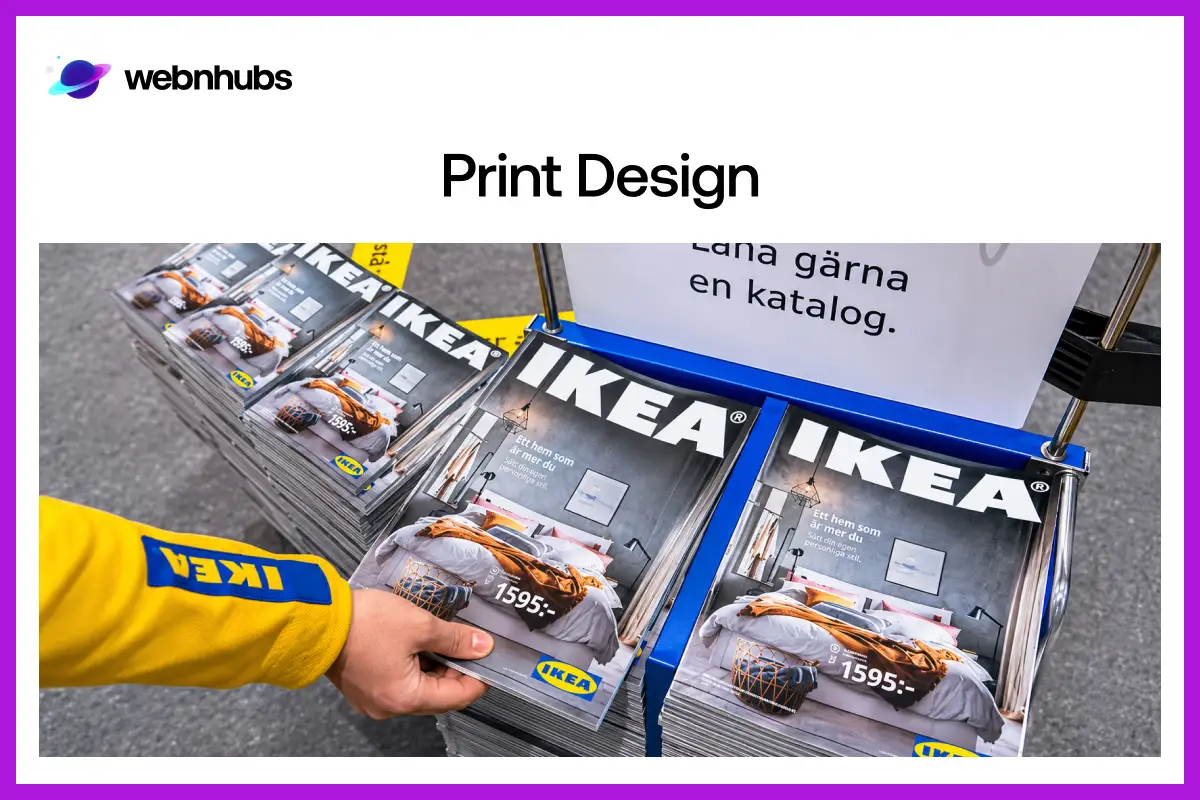
This was the first thing to exist on paper and still carries the tradition today. Print design refers to the physical marketing materials such as flyers, brochures, posters, postcards, vouchers, calendars, and banners.
From a billboard to a business card, a piece needs to grab attention and convey the brand message.
In a world of social media, there are still people who rely on print: a card in a wallet is still in front of them long after a post scrolls off their feed.
IKEA’s Printed Catalog
IKEA has been printing its iconic catalogue since 1951, for 70 years. It was the first place for millions of homes to browse furniture, which exemplifies how long a well-designed print piece can influence a brand.
Digital Design
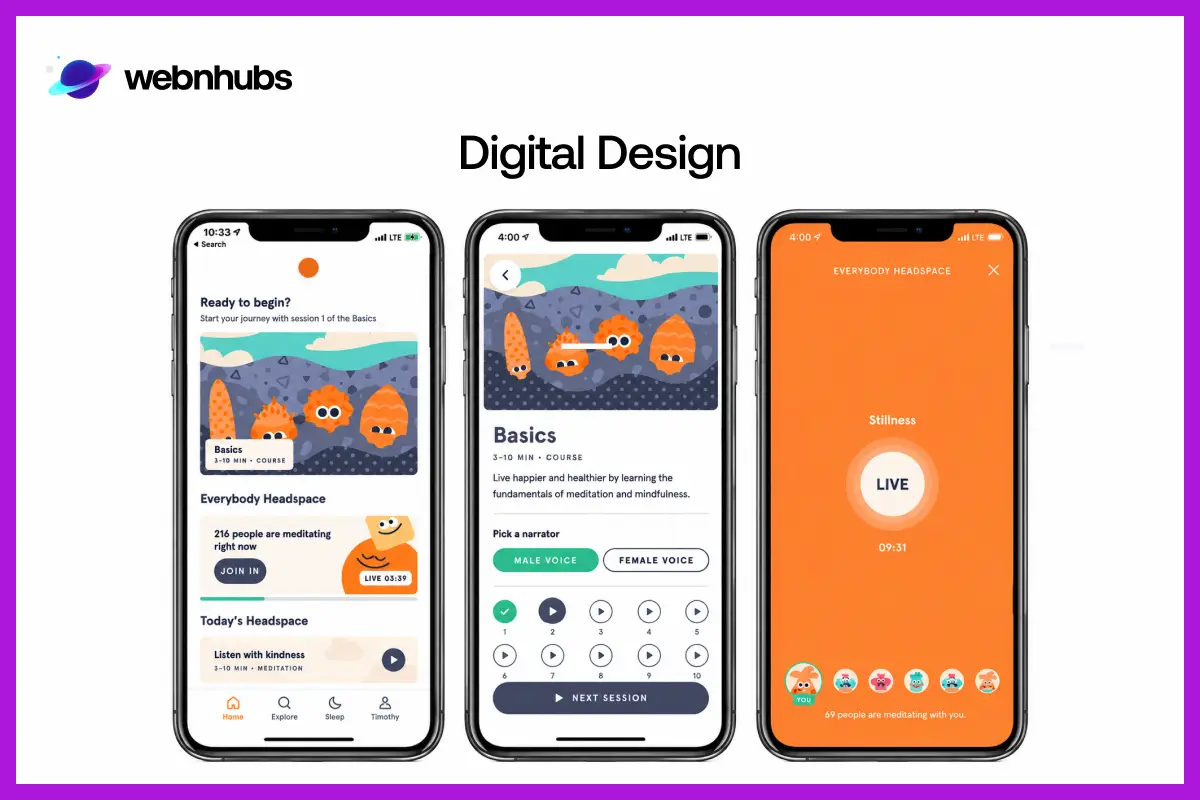
Digital design encompasses all forms of visuals created for screens, such as social media graphics, icons, online ads, email templates, app interfaces, and website designs.
With businesses going online, it has become a vital part of marketing. Good digital design must be attractive and easy to use, because people might see it on a large monitor one moment and a small phone the next.
Headspace Across Every Screen
The same soft colors and rounded illustrations are used throughout the Headspace app, emails, and online ads. It looks serene and familiar no matter which screen it’s on.
Brand Identity and Corporate Image Design
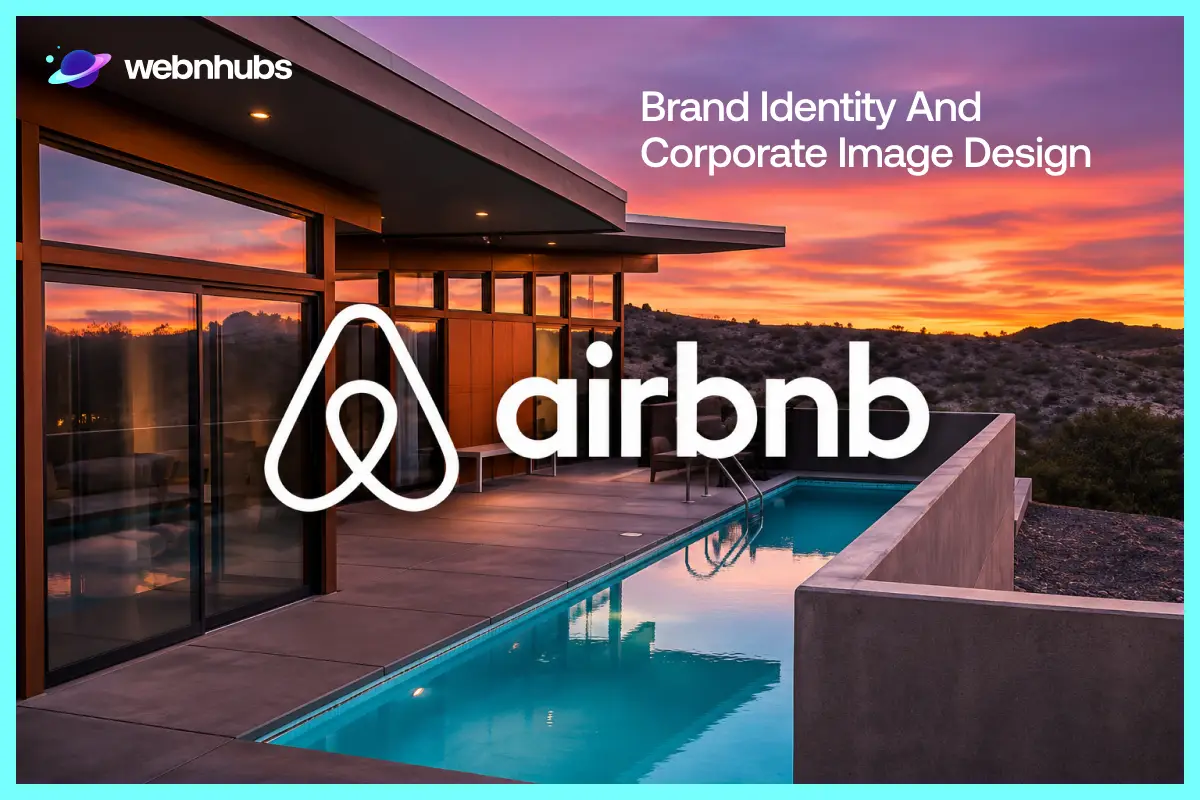
It is about establishing the visual system that helps make a business recognizable. It begins with a logo, color palette, and fonts, then expands out to business cards, stationery, and a brand style guide.
All the design elements must be consistent throughout all channels, from the website to the delivery van. This helps users relate to the brand values and have faith in it.
The style also matters. For instance, a modern technology firm would prefer to use a clean layout paired with sans serif fonts.
However, a law firm must stick to a traditional layout with classic serif fonts. This way, a brand does not only establish a strong identity but distinguish itself from its competitors and establish a loyal customer base.
Airbnb’s Bélo Symbol
In 2014, Airbnb completely re-branded itself and removed its wordmark and replaced it with a single symbol known as the Bélo.
It’s everywhere from the app icon to the website, and people can spot it without the name.
Packaging Design
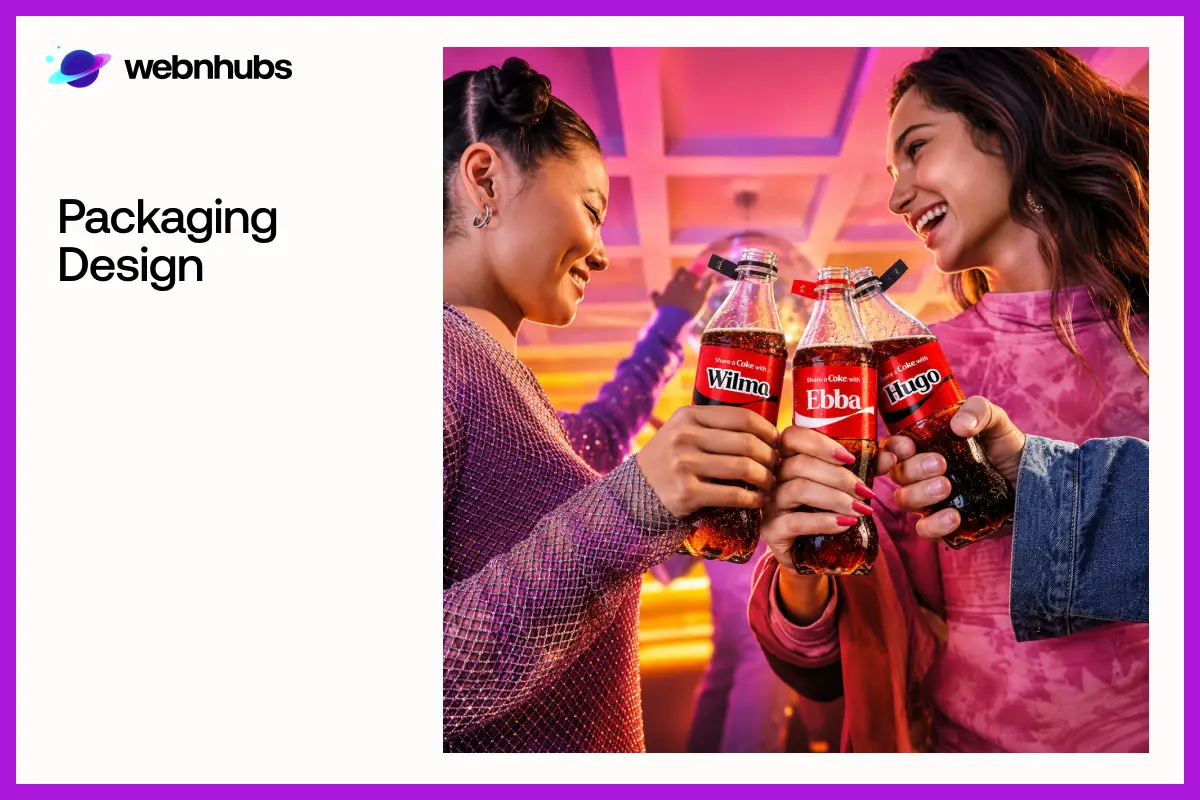
In packaging design, the focus is on designing product packaging materials that enhance the appearance of boxes, bags, bottles, and labels.
This is an undeniable fact: in the food, cosmetic, or luxury goods industries, the first point of contact is the product package. It not only protects the product inside but also helps it stand out on a crowded shelf.
It’s like providing an incentive for consumers to select it. There are packages that take a creative approach and packages that are functional, and the best ones are a combination of both.
Many food companies are also opting for recyclable packaging, due to consumers’ preference to shop with an eco-conscious perspective.
Coca-Cola’s Share a Coke
In 2011, Coca-Cola got rid of its logo and replaced it with favorite first names in Australia. The campaign went global and made the package the selling point, as well as the point of sharing and capturing pictures.
Environmental Design
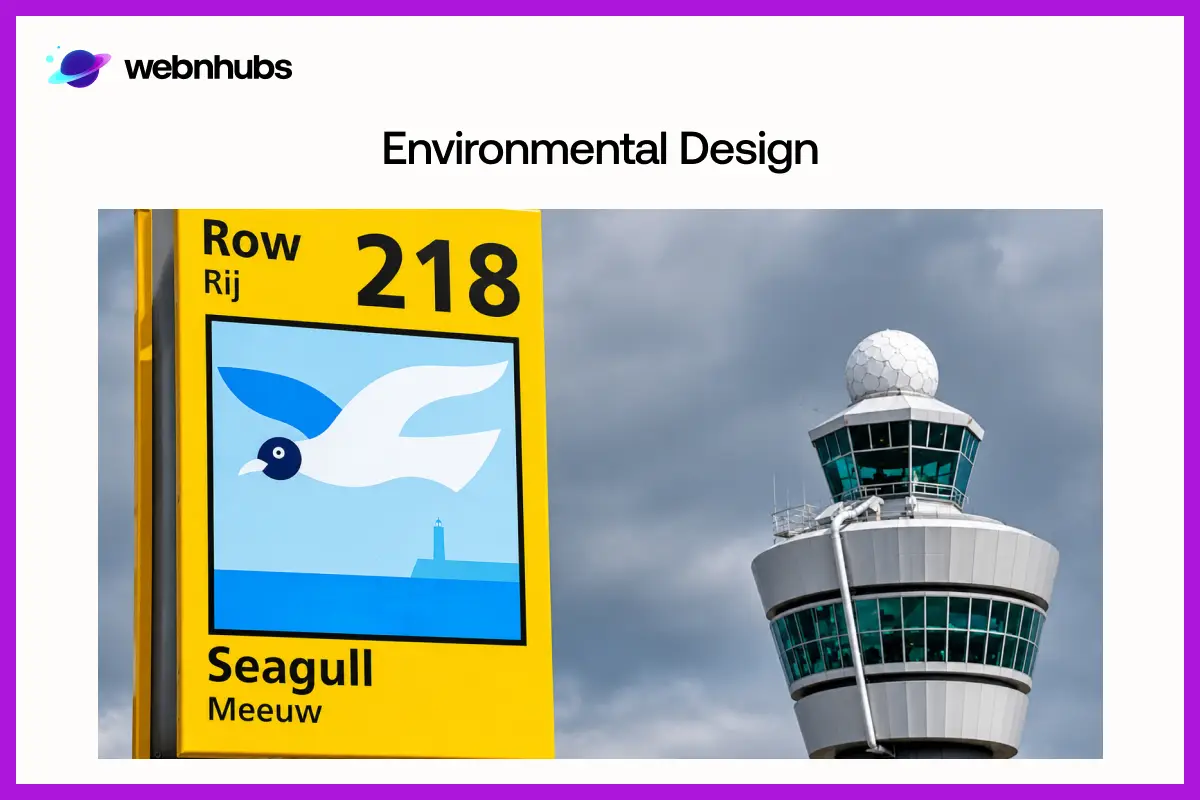
It is the type of graphic design that is applied in physical spaces like offices, shops, museums, airports, and exhibitions.
It leverages wayfinding signage, murals, window graphics, digital signage, and trade show displays to alleviate confusion and make a place feel like the brand.
Along with wayfinding, which helps people find their way, it covers spatial planning and visual storytelling.
Schiphol Airport’s Yellow Signs
Amsterdam’s airport, Schiphol, is known for its bright yellow wayfinding signs. They assist millions of travelers in reaching their gate without requesting directions.
Motion Graphic Design
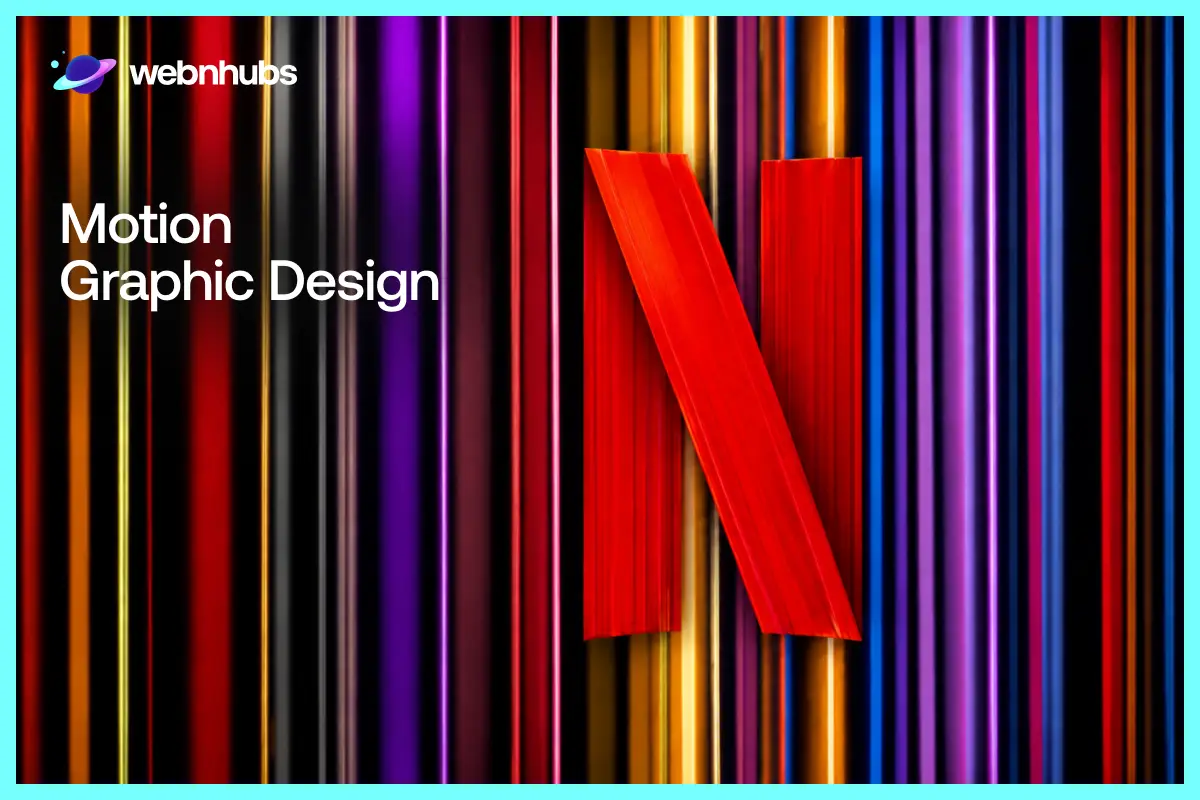
Motion graphics design is the art of incorporating movement elements such as animation and video into graphics.
Video now dominates YouTube, Instagram, and TikTok, so companies create explainer videos, product demos, animated logos, and short social clips to catch viewers that a still image might miss.
Combined with music, sound effects, and voice-over, animation can convey a brand story in seconds.
Many software companies also use animated explainers to make complex ideas easy to follow which is another reason why it is important to use motion graphics.
Netflix’s “Ta-Dum” Intro
The animated logo is just a few seconds long at Netflix, but the red ribbon of light and “ta-dum” have become a part of the brand. Most viewers are familiar with the content that follows the logo before it finishes.
Advertising Design
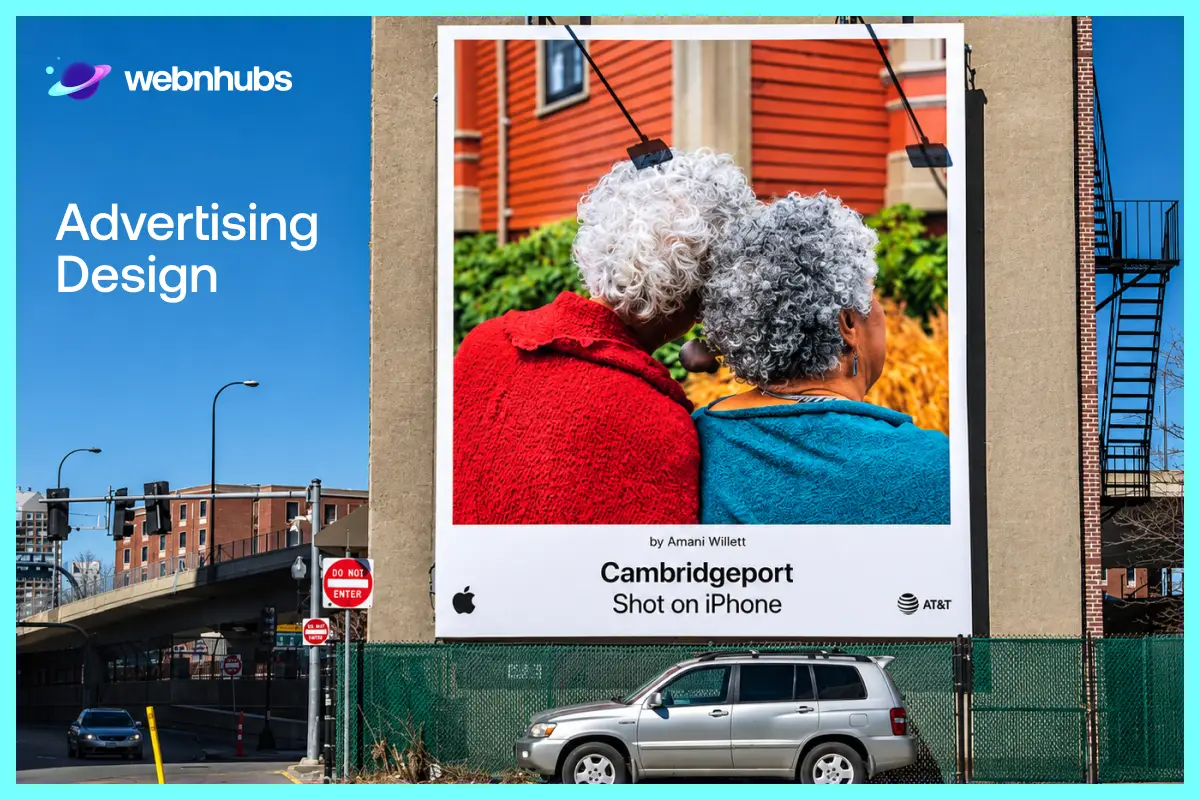
Advertising design is the visual part of an ad campaign, whether it’s a billboard, web banner, a magazine ad, or social media ad. The primary objectives are to capture attention, generate leads, and build brand awareness.
Ad designers are constrained by the time, attention span, and size of the banner, the distance from which their billboards will be viewed, and the limited viewing time these banners will have.
Some brands go beyond the realm of ads and continue their campaign with merchandise design that keeps their message in people’s hands.
Apple’s Shot on iPhone
The concept of Apple’s Shot on iPhone campaign was to use the photos of its customers as billboards all over the world.
The ads omitted the detail of any technical specifications and let the product itself demonstrate its camera skills.
Publication Design
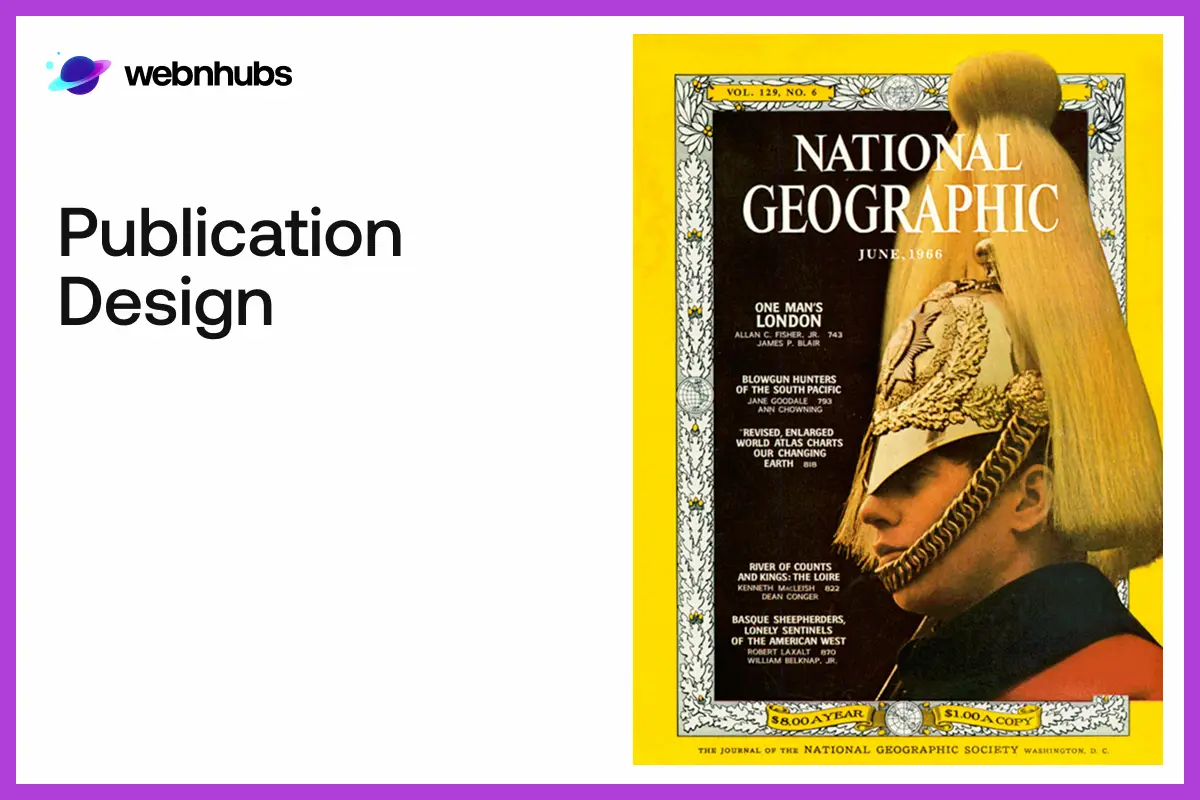
Publication design refers to the arrangement and composition of printed and electronic publications, such as magazines, newspapers, books, catalogs, eBooks and internet articles.
The placement of fonts, images, and white space makes it easy to navigate through many pages without getting lost.
Content flows with a clear visual hierarchy, keeping information informative, attractive, and easy to follow.
National Geographic’s Yellow Border
For decades, National Geographic’s covers have been bordered by the same yellow. The choice of layout has become so iconic that it is now the brand’s trademark.
Web Design
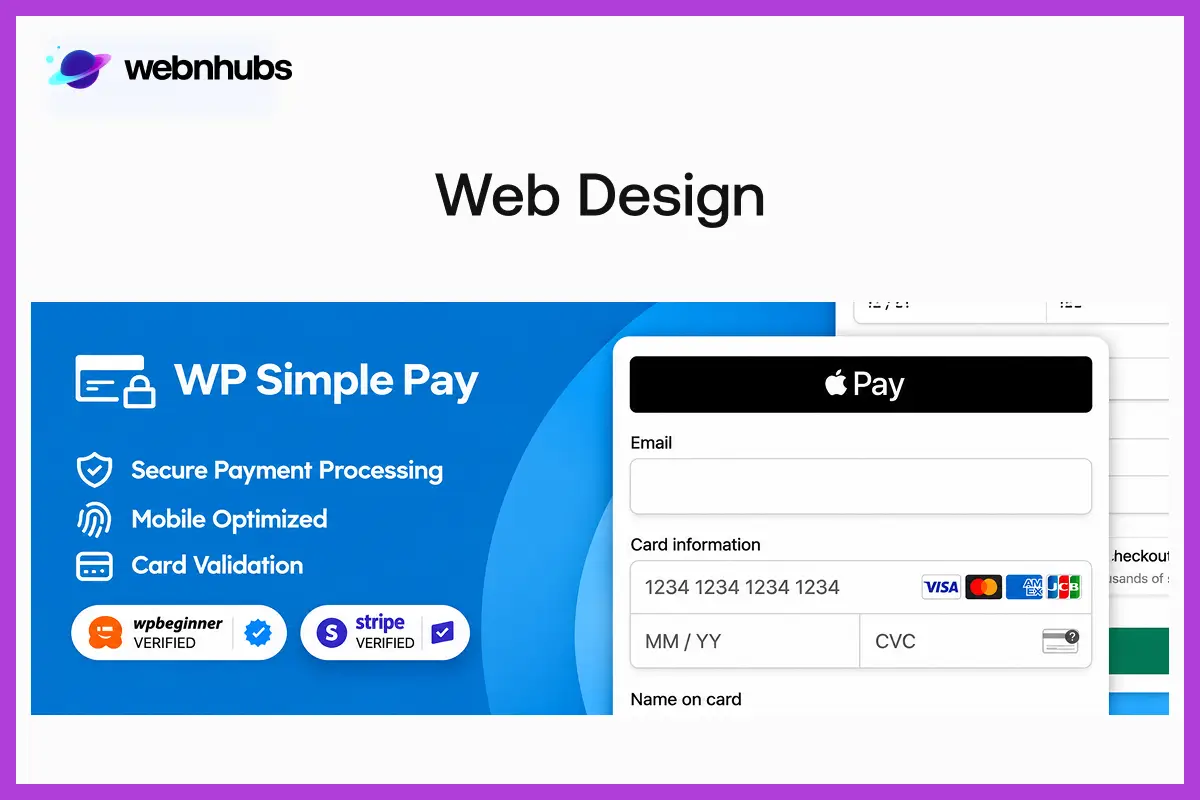
Web design encompasses the appearance of a website as well as the arrangement of the pages.
A web designer designs the home page, inner pages, landing pages, navigation, and appearance of the site and ensures it functions on mobile phones, tablets, and desktops.
A good web design is user-friendly, engages and keeps the customer’s attention, and converts more of them to customers.
Stripe’s Website
Stripe is a payments company that has received high praise from designers for its website. It is so simple due to clean layouts, colorful animated gradients, and clear product sections.
Illustration Design
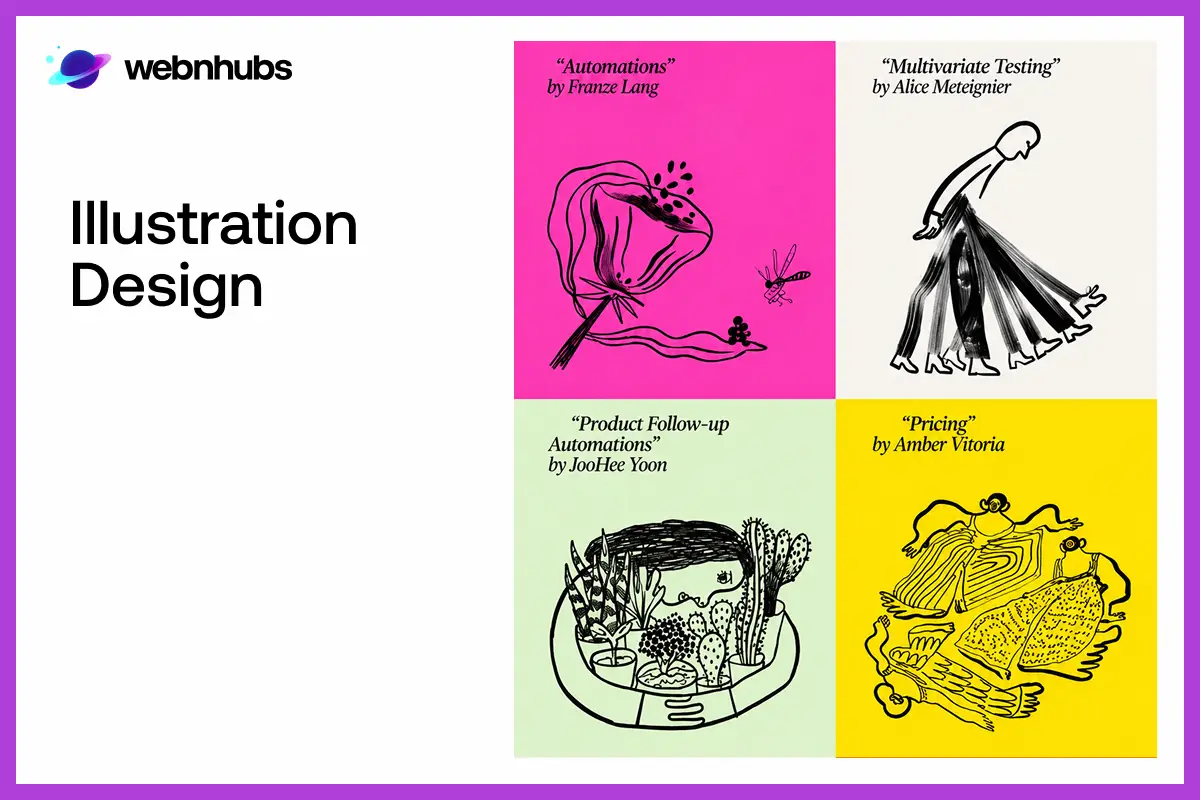
Illustration design is the creation of original graphics and artwork for marketing materials, adverts, packaging, websites and social media.
In contrast to photographs, illustration is the ability of a brand to produce its own image, icon, and mascot to tell who it is. They may range from charming cartoon characters to intricate graphs for business clients.
Vector artwork maintains its resolution regardless of scale, making it perfect for print and online applications.
Mailchimp’s Illustrated Brand
Mailchimp is an illustrated brand. It has quirky illustrations throughout the site and a chimp mascot called Freddie in its emails, giving an email marketing tool a playful twist.
UX/UI Design
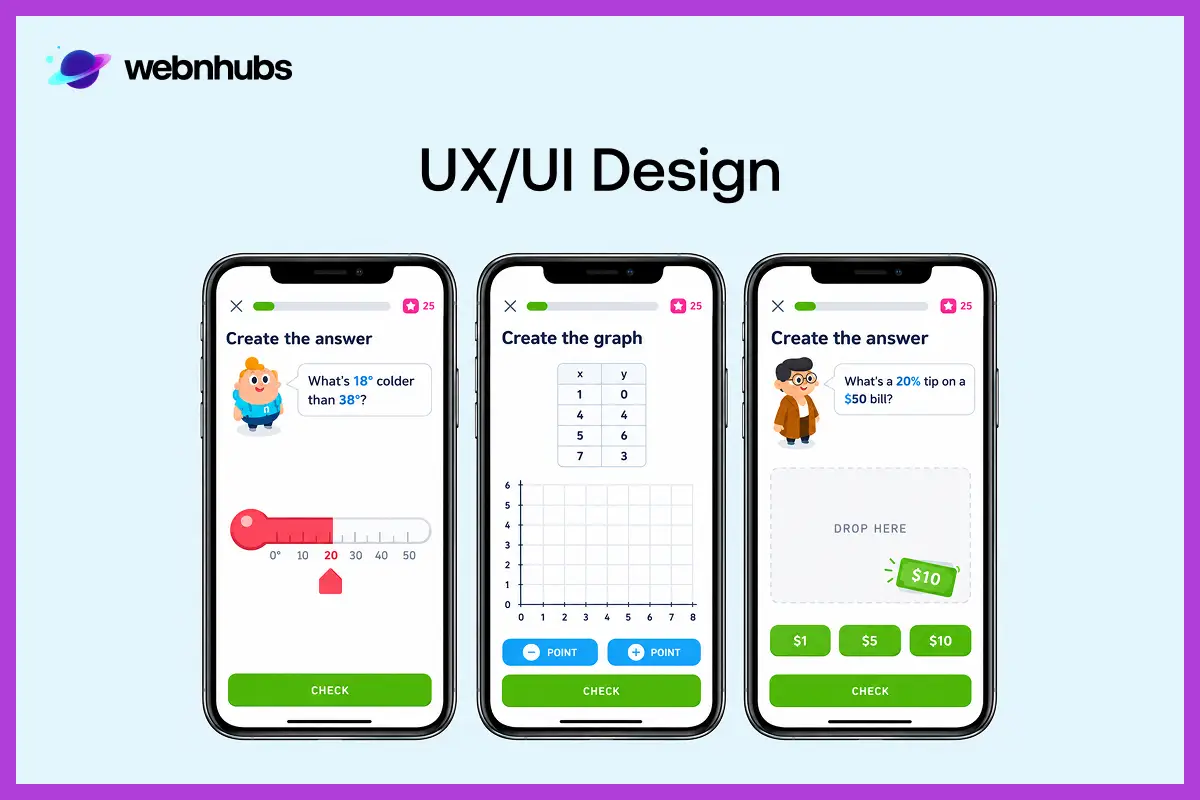
UX/UI design is a combination of two related fields. UX (user experience) design is about how usable a website or app is, about the sequence of actions a person goes through to join a site, to locate a product, or to check out. UI (user interface) design is about what users actually see and tap on, like buttons, layout, icons, and forms.
The work progresses from user flows to wireframes, and then to clickable prototypes and completed app screens.
But when combined, UX and UI make a good-looking product into a product that users love, and this makes visitors happier and leads to more conversions.
Duolingo’s Learning App
Duolingo’s lessons are short, its progress is easy to see with a simple progress bar, and once you start using it, you’re encouraged to keep doing it by maintaining a streak with its streak counter. These are the small touches that have become huge selling points for users to log in daily.
Typography Design
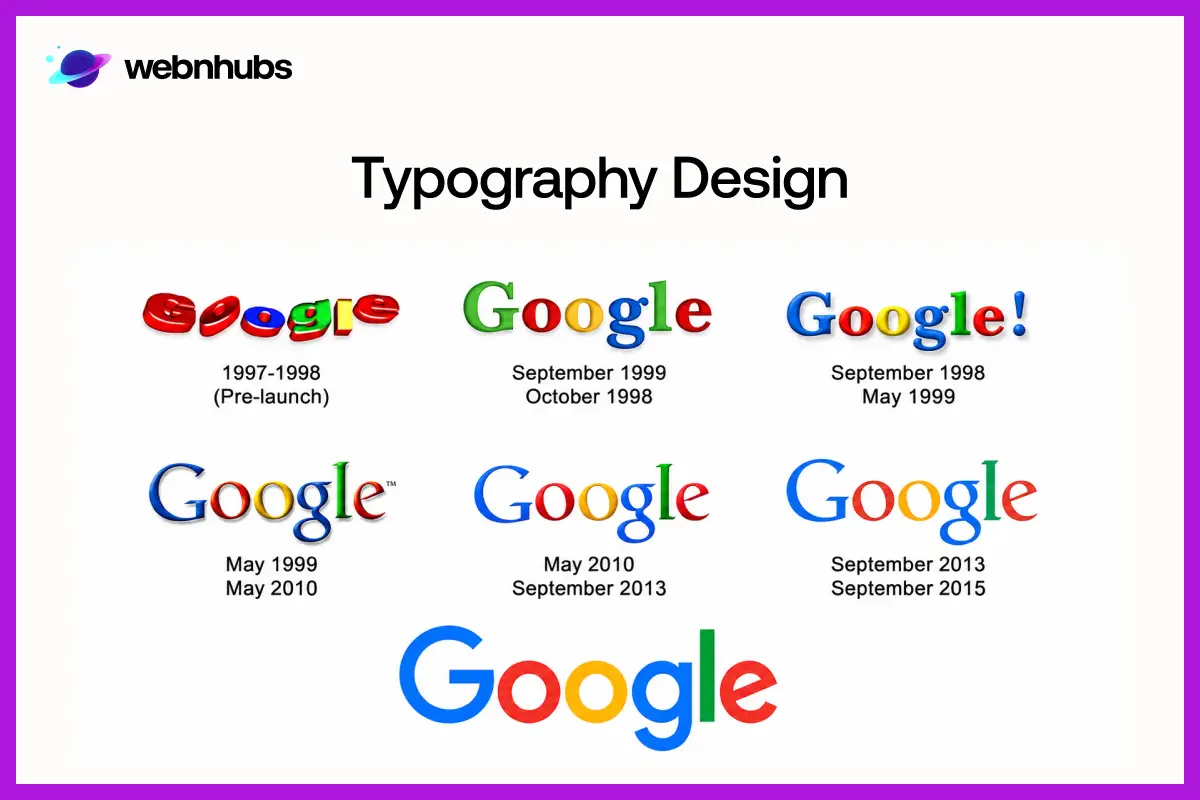
Typography design is the art of arranging text, making it easy to read, and conveying the correct meaning.
It isn’t just a matter of selecting a font. In addition to the shape and size of letters, designers consider kerning (space between letters), leading (space between lines), weight, and layout, and can produce font combinations, custom lettering, or a complete typeface.
The options you make set the tone of a brand. The bold sans-serif font adds a lively touch, while a classic serif exudes seriousness and reliability.
Google’s Product Sans
Google created a new font for its new logo in 2015, called Product Sans. With its rounded letters, it looked sharp on any screen size and felt friendlier.
Illustration for Games and Animation
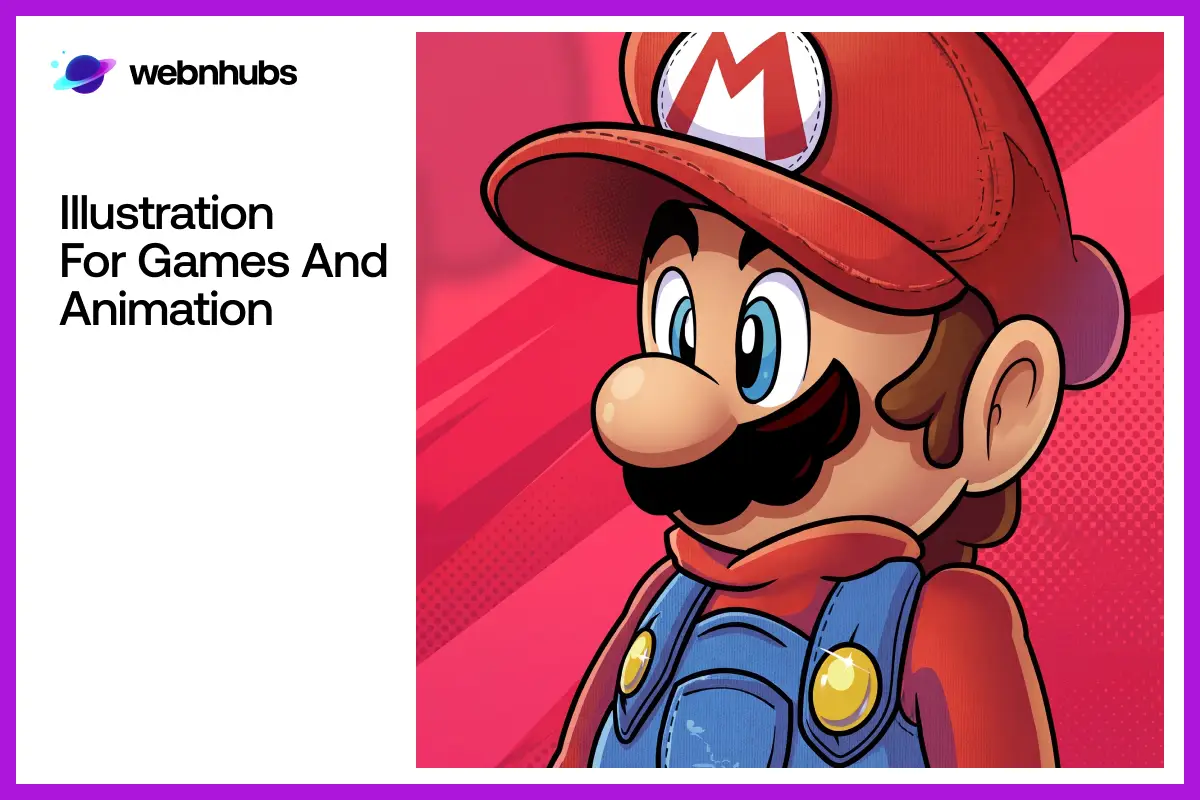
Illustration for games and animation is a particular form of illustration that merges traditional and digital techniques.
These illustrators produce storyboards, environments, concept art, and character designs for video games, animated films, etc. Their work is integral to the story and draws the player or viewer into the world.
It can be as simple as a 2D character or as complex as concept art, helping animators and developers create 3D environments.
Nintendo’s Mario
Mario’s cap and mustache had to serve a purpose, after all. Early game graphics had very few pixels, so the cap avoided drawing hair and the mustache avoided drawing a mouth. This expedient decision evolved into one of the most iconic film characters of all time.
Social Media Design
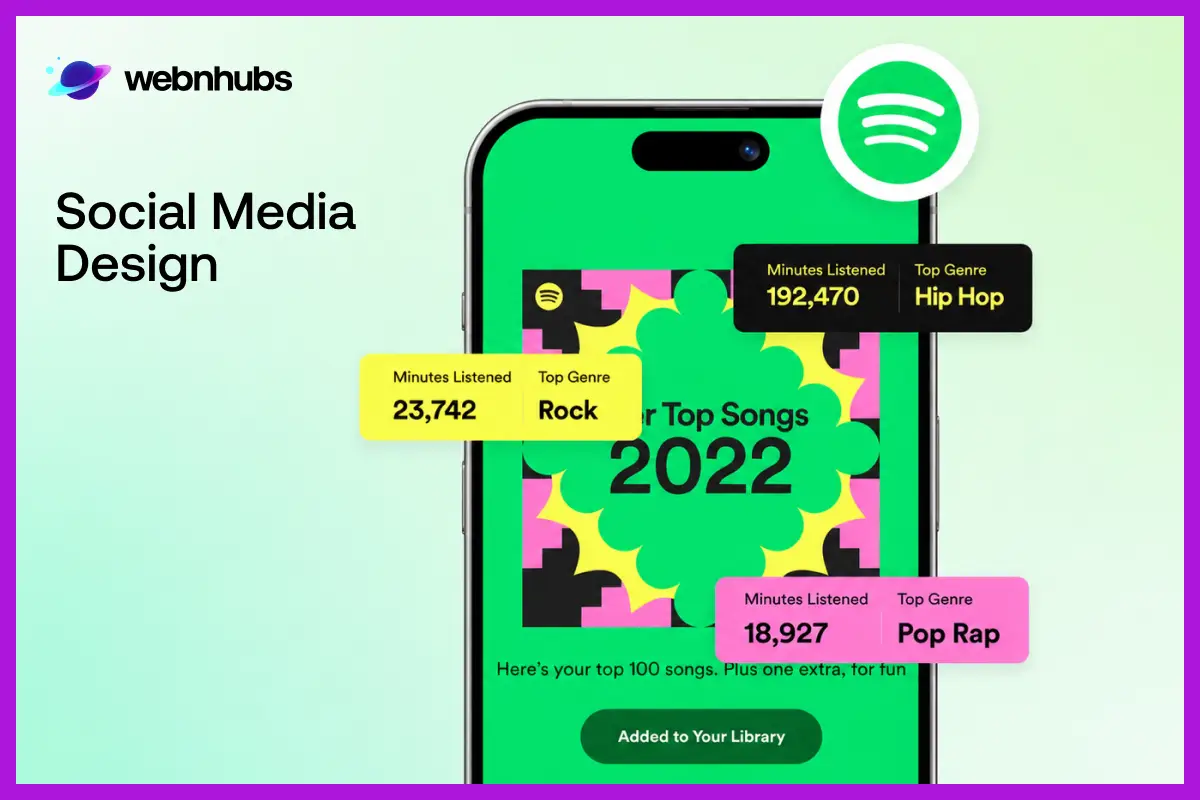
Social media design makes graphics for social media sites such as Instagram, Facebook, LinkedIn, TikTok, and X (Twitter).
To stand out in a feed full of posts, carousels, stories, and ads, bold visuals are used, and there’s very little text.
Each platform also has different sizes and formats, so there are likely to be multiple versions of the same campaign.
Spotify Wrapped
Spotify then releases Wrapped cards each year, colored with each user’s listening history. They’re shared by millions of people and help spread Spotify’s brand on every social platform for free!
Infographic Design
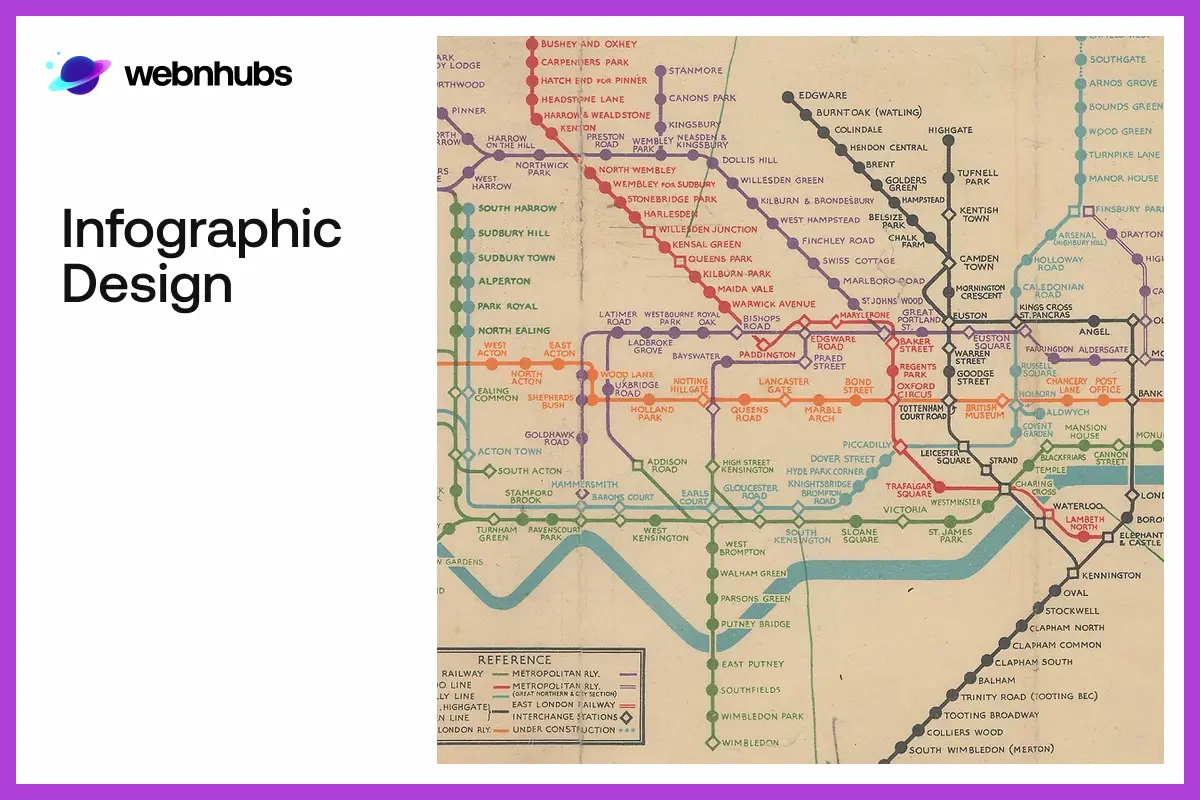
Infographic design is the process of converting data and information into a visual format that is easily comprehensible by humans.
It features text, numbers, and illustrations, making it useful for content marketing, reporting, and education.
Infographics are particularly useful for statistics, timelines, process diagrams, and comparison charts.
The London Underground Map
Harry Beck’s London Underground map (1933) omitted real distances and emphasized only the connectivity between stations. This one decision made the network much more readable, and transit maps all over the world continue to follow his lead.
Corporate Communication Design
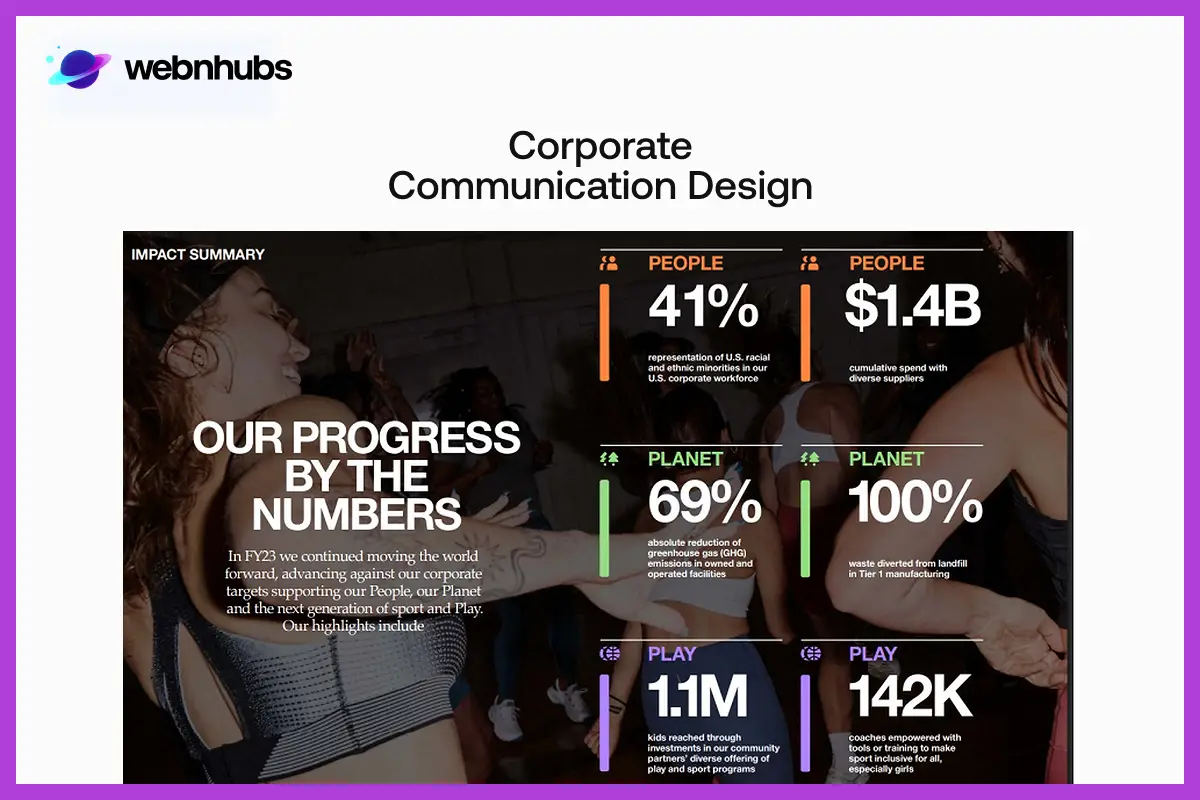
Corporate communication design refers to the graphic design aspects of the materials a corporation uses to communicate information to its employees, investors, and partners, including annual reports, pitch decks, presentations, newsletters, and company profiles. These pieces need to be readable, consistent, and professional-looking.
For instance, an annual report is more than just a report of financial results. It is also a branding tool, so it needs to convey lots of information without being boring.
Nike’s Impact Report
Nike has released an Impact Report on sustainability and community efforts each year. Charts and photos, along with succinct summaries, convert a long corporate document into something that can be read by investors and customers.
Digital vs. Web vs. UX/UI Design
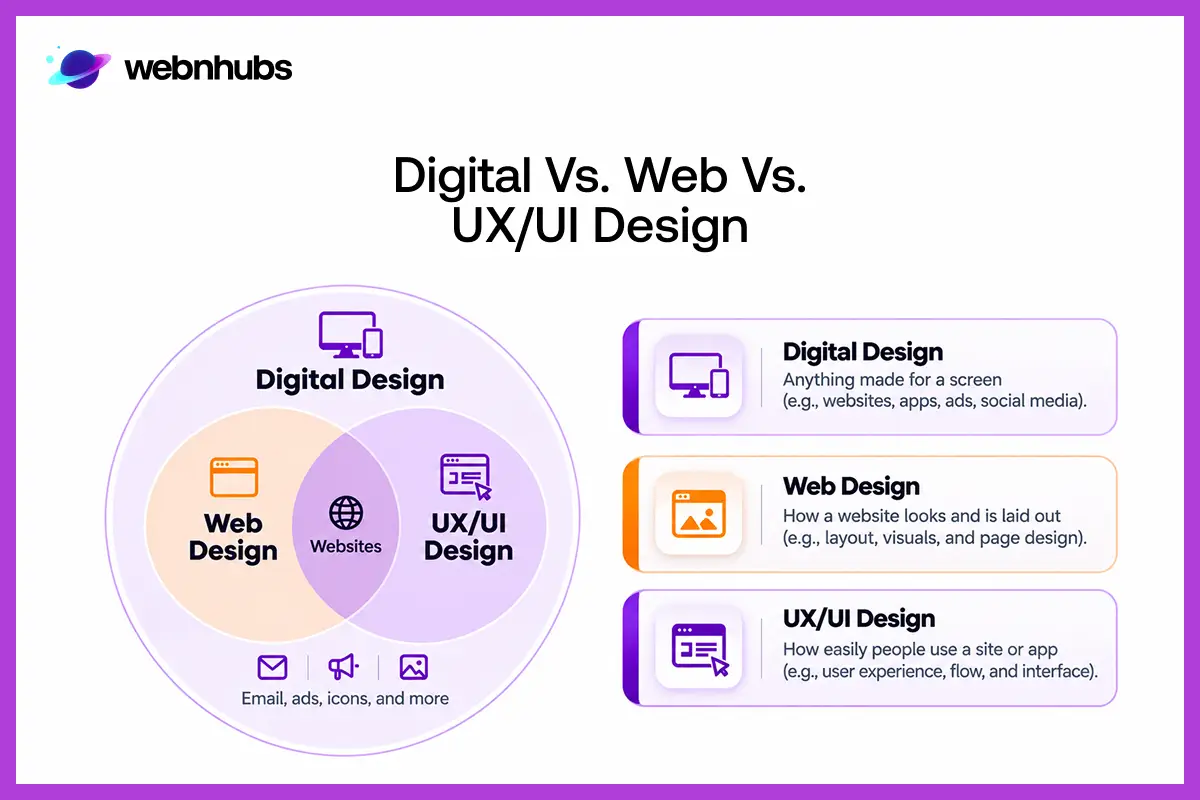
Web design is part of it and deals with the appearance of websites. UX/UI design is also part of digital design but concentrates on user experience and user interface of a website or app.
In a typical website project, each one is involved, with a UX designer deciding on how visitors should navigate the site, a UI designer designing the buttons and forms, and a web designer putting the whole piece together and making it a completed site.
| Types | Scope | Main Question It Answers | Example Deliverables |
| Digital Design | Anything made for a screen | How should this look on screen? | Email templates, digital ads, icons |
| Web Design | Websites | How should this website look and be laid out? | Homepages, landing pages |
| UX/UI Design | Websites and apps | How easily can people use this? | Wireframes, prototypes |
Choosing the Right Types of Graphic Design for Your Business
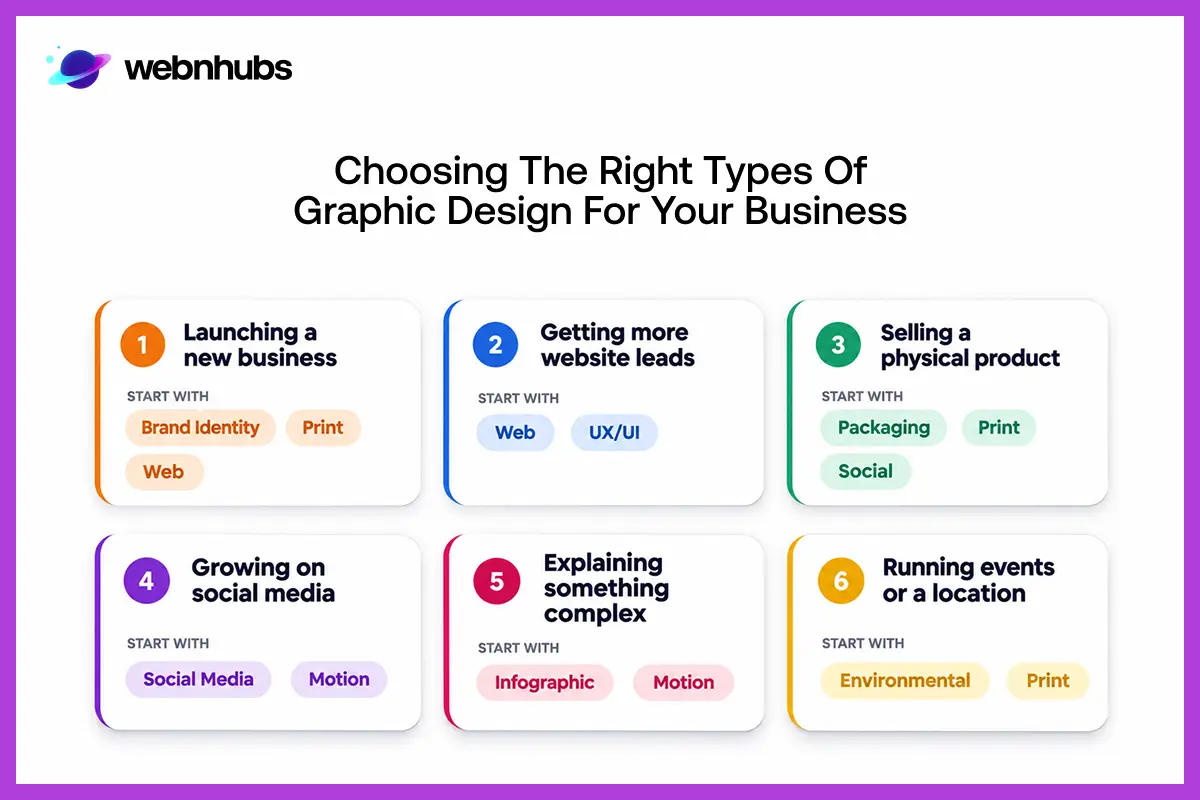
Begin with the concept before you jump into the graphic design types. The following are common business requirements that correspond to the types of graphic design listed above.
Starting a New Business
Establish a strong brand identity with distinct logo design, colors, and fonts, as it will direct the entire design. Next, add print basics such as business cards and a basic website design.
Getting More Leads from Your Website
Pay attention to web design and UX/UI design. It’s important that your contact form or checkout is clearly outlined and easy to navigate, rather than being embellished.
Selling a Physical Product
Invest in packaging design first, then reinforce it with graphics for print and social media, all in the same look and feel.
Growing on Social Media
Make use of motion graphics and social media design. You can market your products in feeds with short videos and get noticed on video-friendly platforms.
Explaining Something Complex
Create an infographic design or a motion graphics explainer video. They can both explain complex information in a way that can be understood in just a few minutes.
Running Events or a Physical Location
Embrace environmental design and print design (signs, banners, posters, booth graphics) so visitors can find their way and remember your brand.
Still not sure where to start?
Let us know what you're trying to achieve for your business, and we will pair it with the perfect design that's right for you.
Conclusion
Graphic Design is a wide-ranging discipline, and every style is there for a reason, from setting up tone and message for a specific brand to grabbing someone’s attention in the social media feed.
Knowing more about these kinds of graphic design will assist you in maintaining the consistency and attention of your brand across all platforms.
Not all of them are required for every business. First, establish a strong brand identity and then build on the types that are most applicable to your customer’s time.
If you’re looking for more interactive content, consider using clickable infographics, 3D product packaging, or motion graphics in your campaigns.
Let’s Find the Right Design for Your Brand
At Webnhubs, our designers work across branding, print, packaging, web, UX/UI, illustration, and more, so every piece of your brand looks like it belongs together. Tell us what you are working on, and we will recommend the right place to start.
Frequently Asked Questions
There is no official number. Many guides list eight main types, while others list more than 15 by treating specialties like infographics or typography as separate types. This guide covers 16 types that businesses most often hire for.
A commonly used list includes visual identity, marketing and advertising, user interface, publication, packaging, motion graphics, environmental, and illustration design. Most other types, such as infographic or typography design, fit within these.
Yes. Web design applies graphic design skills like layout, color, and typography to websites. It overlaps with UX/UI design, which focuses on how easy a website is to use.
Choose print for physical materials like brochures, packaging, and signs. Choose digital for websites, social media, and online ads. Most businesses get the best results by using both with the same look.
Brand identity design. A clear logo, color palette, and fonts give every later project a consistent look, which makes a new business easier to recognize and remember.
Most designers use Adobe Illustrator, Photoshop, and InDesign for print, branding, and publications. Web and UX/UI designers often use Figma, Adobe XD, or Webflow, while motion designers commonly use After Effects, Premiere Pro, or Blender.

Hafsa Hanif is a talented content writer at WebnHubs, specializing in topics such as graphic design, web design and development, logo design, and animation. With her deep understanding of design principles and creative processes, Hafsa crafts engaging, informative, and SEO-optimized content that resonates with readers. Her expertise in SEO ensures that her articles not only captivate audiences but also rank well on search engines, helping businesses boost their online presence through compelling design-focused narratives.
