- Core Technical Graphic Design Skills You Need
- Industry-Specific Skill Applications
- Non-Technical Skills
- 6 Design Principles to Know as a Graphic Designer
- The Growth Mindset: How to Improve Graphic Design Skills
- Types of Graphic Design You Can Apply These Skills to
- Get Started With Webnhubs for Graphic Design
The graphic design scene in 2026 is not about making things look good anymore. It is about businesses getting results with those designs. The world of graphic design is changing faster than you can say, Jack Robinson.
New tools, trends, and tech are changing how designs look. And that is why knowing just Photoshop alone simply won’t cut it anymore.
Graphic Designers now need to be good at just about everything to be different. At Webnhubs, we’ve seen how strong design skills directly impact business growth.
Whether it is building brand identity or improving site experience, for that matter, good design helps attract customers as well as increase conversions.
That is why in this blog, we will talk about the graphic design skills you need to master. These skills for graphic design will help you design better as well as create work that delivers value.
So, without any further ado, let’s get right into it.
Core Technical Graphic Design Skills You Need
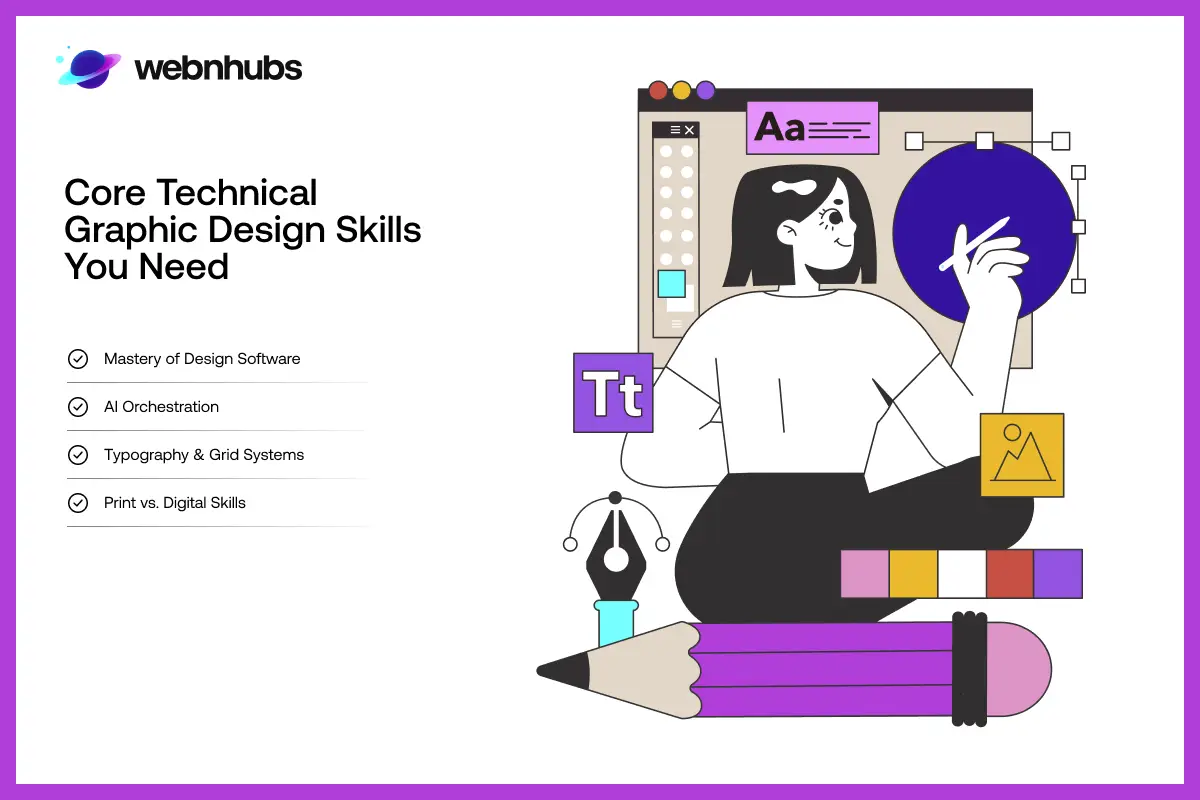
The following graphic design skills list includes the technical graphic design skills you need:
1: Mastery of Design Software
To be a graphic designer, you have to be good at using the tools that everyone uses. There are a lot of programs like Adobe Creative Cloud.
It has the entire collection in it. It consists of Photoshop, as well as Illustrator and InDesign. Then there is Figma and Canva. These are all used a lot in the design world.
Each design tool has its purpose. Photoshop serves as the most effective tool for picture editing. Illustrator functions as the primary software for Logo Design.
Figma serves as a design tool for both site and app development. Canva provides an excellent solution for team design work.
The design tool training process enables you to achieve faster work performance and simpler idea sharing with others.
You will also be able to make designs that look PRO. The more you use design tools, the more confident and creative you will become with graphic design tools when you work on projects.
Let Webnhubs Help You Create Designs that Stand Out!
Ready to Level Up Your Graphic Design Skills?
2: AI Orchestration
AI is changing the way designers go about their work. That is why knowing how to use it is a must. It can give you an upper hand.
AI tools can help designers create ideas. More so, it helps them generate images. It can even suggest layouts in a few seconds.
This makes it easy and faster to design stuff. Instead of designing from the ground up, designers can use AI for quick drafts.
Then they can improve it with their creativity. AI is like having an assistant that helps designers think of new ideas.
When designers use it correctly, it does not replace their skills. It makes their skills better. More so, it helps them design smarter and not harder.
3: Typography & Grid Systems
Typography and grid systems are really important for design. The thing about typography is that you have to pick the fonts and put the text together in a way that is easy to read.
More so, it must look nice. Grid systems help you put all the things on a page in a way that feels balanced and neat. These things might seem basic.
But they are what make a design look good and not messy. When you use the spacing and alignment as well as choose the right fonts, your design is easier to understand.
Getting good at typography and grid systems helps you make designs that look good. It also helps get your message across clearly.
4: Print vs. Digital Skills
When you are making things for print and digital platforms, you need to know the ins and outs of both.
Print is like making brochures as well as Business Cards and posters. For these things, you have to think about the colors. Also, think about the paper and how clear it is
Digital Design is different. It is about making sites, apps, and pictures for socials. Digital design requires designers to consider both screen dimensions and user interaction patterns for the design.
Differentiation between print and digital design enables you to select appropriate colors and sizes of elements for your design.
A good designer knows about both. They can create visually appealing designs that succeed in print and digital display formats.
Industry-Specific Skill Applications
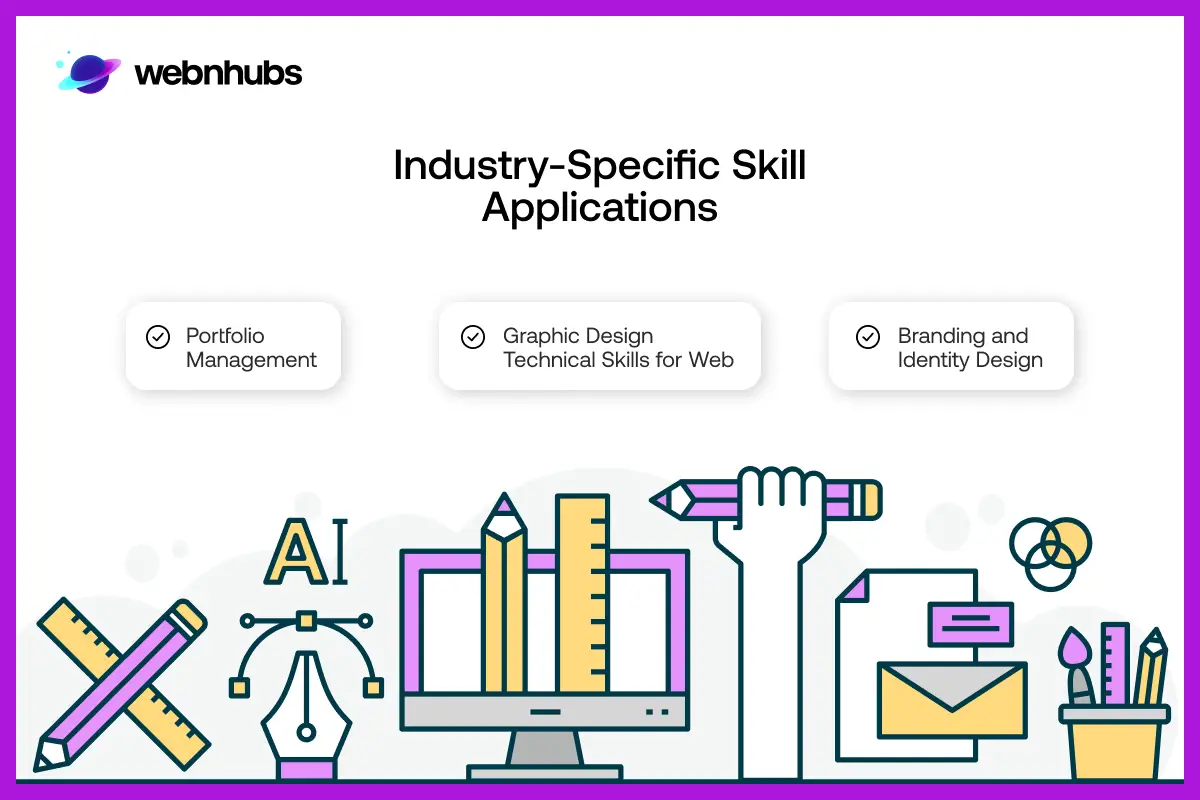
The following are the skills needed for graphic design for industry use:
5: Portfolio Management
Your portfolio is like your personal shop window. Your work demonstrates your abilities before you even say anything.
To achieve visibility in your field, you must showcase your work through professional and clear presentations.
Focus on showing your best projects. You don’t need to show everything you’ve ever made on your Graphic Design Portfolio.
Your resume should reflect your skills for graphic design resume in a clear way. This is so that hiring managers can understand it.
Many firms use AI tools to scan resumes. So, include keywords like “Adobe Illustrator,” “Figma,” or “UI design.”
This helps your portfolio get noticed. A good portfolio combined with a good resume increases your chances of landing design jobs.
6: Graphic Design Technical Skills for Web
When you are making a design for the site, it is not about how it looks. It is about performance as well as how easy it is to use.
One thing that is very important is Interaction to Next Paint. This is about how fast a page works when people click on it.
Good web designers make sure that the pages they create load quickly and feel nice to use. It is also very important that everyone can use your Web Design.
This includes people with disabilities. This means you need to make sure the text is easy to read.
Also, ensure the colors are not too similar. This is so that it is easy for people to find their way around.
Web design will always tick if you build it with people and how it can be used in mind. And more people will like using it.
7: Branding and Identity Design
Branding is more than a Logo. It is the look and feel of a firm. When you are a designer, you need to create systems that keep everything.
This means you have to think about colors as well as fonts and styles. The design bits function to simplify your work.
The button styles function together with icons and layouts to create a unified design system. You can then use it across various platforms.
This helps build a brand identity. Using the design bits also saves time when you are creating new designs.
A designed brand system makes a business look PRO and trustworthy. This helps the firm stand out. It also becomes memorable in the minds of the customers.
Want Designs that Drive Real Business Results?
Partner with Webnhubs for Creative and Impactful Solutions!
Non-Technical Skills
The following are some non-technical graphic design skills needed for the workplace:
8: Creativity
Creativity is what makes your designs tick. It is about thinking and coming up with fresh ideas that grab people’s attention.
Also, you do not need to be gifted with creativity. You can learn it and get better at it. You can do so by trying out new styles. Then you can hone them. Also, stay updated on what’s hot in design.
9: Communication
Good communication helps you understand what clients want. It will help you and explain your ideas as well. Designers must show their design work to clients so that clients can provide their opinions about it.
The clients expect you to share your thoughts with them. You need to listen to them. When you listen carefully and respond well, your designs are better.
The clients are also happy that way. Good communication ensures that the understanding between you and your clients is spot on.
10: Problem Solving
The purpose of design work involves solving problems. It is more than creating nice designs. You must understand the user needs before creating designs.
It is about fixing problems like a layout. More so, it is all about creating designs that users can access. When you are good at solving issues, you can make designs that tick.
6 Design Principles to Know as a Graphic Designer
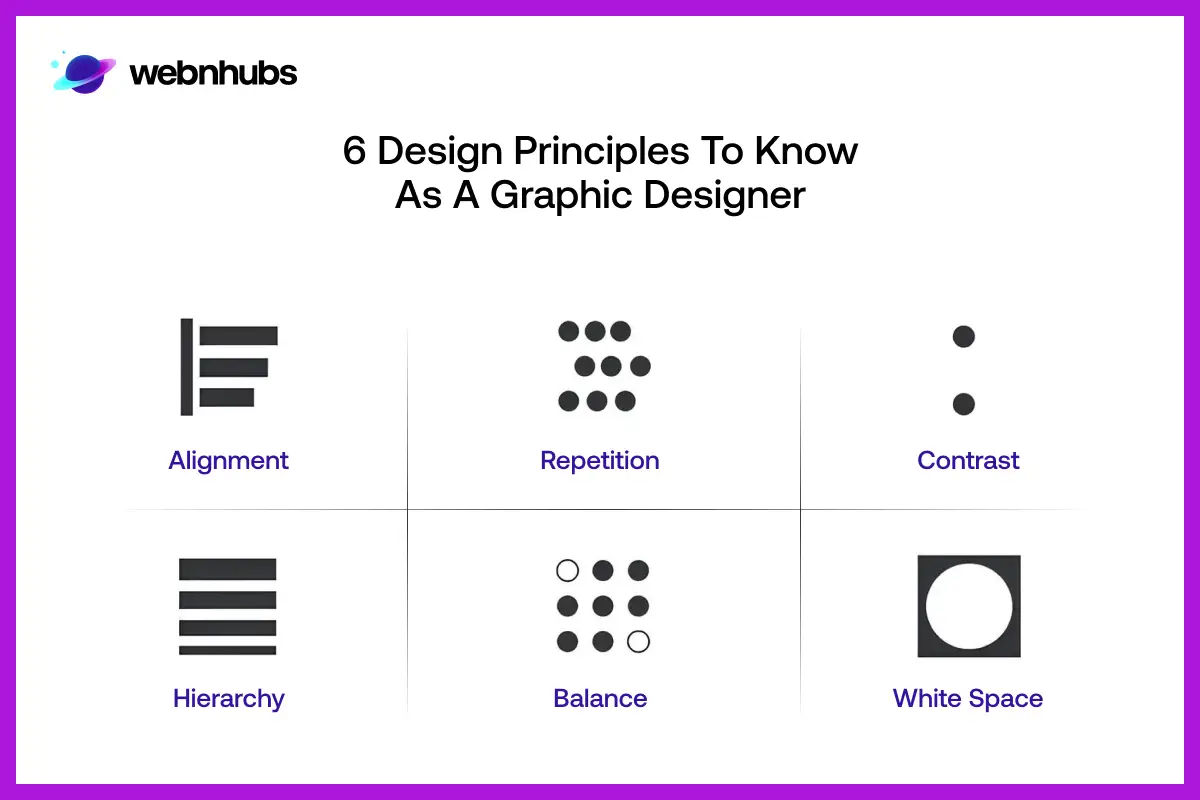
Besides graphic design technical skills, every graphic designer must know the following design principles:
- Alignment: Alignment in design helps to maintain an organized look. It allows elements to be positioned either straight or according to their designated layout. It provides a PRO appearance that enhances content readability through its clean design.
- Repetition: Using the same colors as well as fonts and design bits because of repetition creates a visual pattern. This pattern occurs throughout your entire design. The design approach creates a unified visual identity. It enhances your design work through complete visual harmony.
- Contrast: The different elements become more visible through contrast because it uses light and dark colors with big and small sizes as its differentiation method. The combination of these design elements creates a visual effect. It captures the viewer’s attention while making content easier for users to read.
- Hierarchy: The hierarchy of your design displays its most vital bits. The design elements of your work enable you to direct people to particular content. This helps them understand the main message of your work.
- Balance: The design achieves stability through balance. It prevents excessive heaviness toward one side. The use of symmetrical or asymmetrical balance allows you to design a nice space. This creates a harmonious effect.
- White Space: White Space refers to the empty space that surrounds your design bits. The space provides your content with the necessary breathing space. It minimizes visual clutter. It directs user attention to essential bits of your design.
The Growth Mindset: How to Improve Graphic Design Skills
Improving your design skills takes a lot of time and practice. You need to have the mindset for improving, too.
To get better, stay open to learning things. Try out tools, trends, and techniques often. Meet other designers and find people who can guide you.
They can help you learn from what they have done. Look at graphic design work from top agencies like Webnhubs.
This will help you see what good work looks like. Comparing your designs to theirs can help you improve.
You can build skills over time. You will feel more confident by doing this. Graphic design skills take time to build. So be patient. You must keep practicing graphic design.
Types of Graphic Design You Can Apply These Skills to
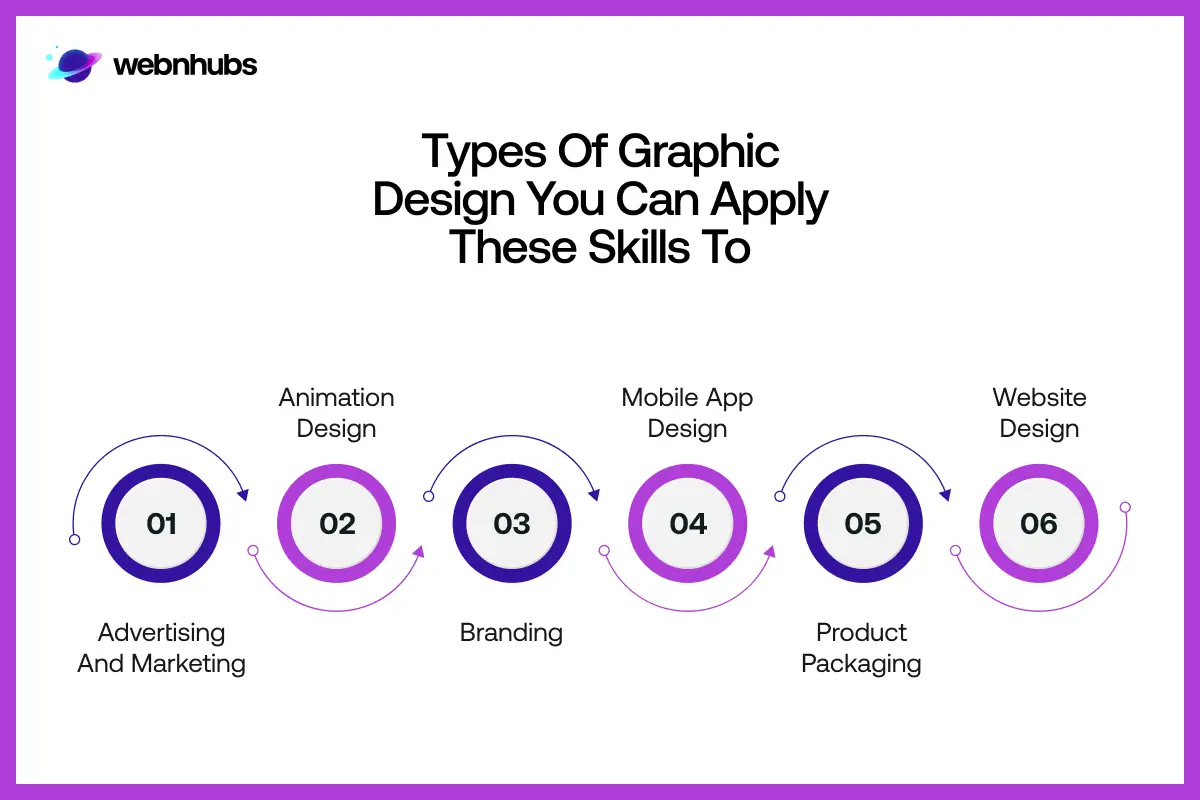
The following are types of graphic design you can create with the skills related to graphic design:
Advertising and Marketing
Graphic design is very important in ads and marketing. It helps create designs that catch the eye.
Designers make Marketing Designs. They create media posts as well as ads and banners. These things get people’s attention. It helps firms promote their products in a nice way.
Animation Design
In animation design, people use top graphic design skills to make pictures move in videos, ads, and other things we watch.
Animation designers think about telling a story. They focus on getting the motion right as well as using timing to make animation design more interesting and fun to watch.
Branding
Branding is about creating a strong image for a firm using graphic design. It involves making a logo as well as choosing colors and using a particular style.
These elements are used all the time so people can easily remember the brand. More so, it helps recall its products or services.
Turn Your Ideas into Creative Visual Designs Today!
Work With Webnhubs to Build a Strong and Memorable Brand!
Mobile App Design
The designers use graphic design to develop app interfaces. It combines visual appeal with a friendly design.
Designers focus on UX. They make sure apps are easy to use, as well as visually appealing and functional.
Product Packaging
Graphical design work for product packaging enables products to achieve better visibility on retail store shelves. Designers create designs for items that look attractive.
They also ensure designs share essential information as well as reflect the brand. This is so it attracts customers to select that product.
Website Design
Site design uses skills in graphic design to develop eCommerce sites. This is so that they are visually attractive and easy to use.
Designers use layout design and color selection to create a site that provides visitors with a good experience while they stay on the site.
Get Started With Webnhubs for Graphic Design
If you are looking to turn your ideas into visuals, then Webnhubs design agency is a great place to start.
Webnhubs provides the best Graphic Design Services. We help firms create designs that look really good as well as deliver results.
Webnhubs focuses on quality and creativity when it comes to branding and site design. With the graphic design skills and expertise from Webnhubs, you will get designs that truly stand out.
Our designs will make an impact on people who see them. So, partner with Webnhubs and let us help you create great designs that grow your brand.
Wrapping It Up
So, there you have it, folks, that is it for this blog on graphic design skills. We hope that the essential graphic design skills we shared in this blog can help you improve the skills in your arsenal. As you know, graphic design is really about sharing ideas and finding solutions. It is much more than creating designs that look good.
When you learn about the ins and outs of design and have the graphic design needed skills, then you can create designs that tick. You can also look at your peers and take notes from their graphic design skills examples to improve yours. And if you need help to create graphic designs, then you can consider Webnhubs for the job. Webnhubs will create the designs you need to level up your band.
Frequently Asked Questions
Designers need creativity as well as Branding, AI, and web design skills in 2026.
Beginners should learn basic design software first. Then they must understand color theory, and learn skills for layout as well as typography.
Your resume needs to show both your software expertise and your typing skills. Your branding expertise and your web design skills and your creative abilities and your problem-solving capabilities and your portfolio management skills.
Your resume and portfolio should demonstrate your abilities in technical software skills, AI tool expertise, UX/UI design capabilities, branding skills, and problem-solving expertise.
You can improve graphic design skills by practicing every day, attending online workshops, learning how to keep up with new design approaches, seeking sponsorship, and working on real-life projects.

Sultan Hanif is a seasoned wordsmith, who brings technology trends and innovations to life through his words. A tech-savvy gamer with a passion for all things football, Sultan blends his technical knowledge with creative storytelling to empower businesses and individuals alike.
